US tightens AI chip rentals as China warns of countermeasures
Washington closed a rental loophole for Blackwell-class AI chips and added five transit countries to license rules, days before Trump meets Xi in Shenzhen.
AIXVZ
AI agents that sell for you. AIXVZ builds sales agents and automates routine business processes — from first contact to deal.
Learn more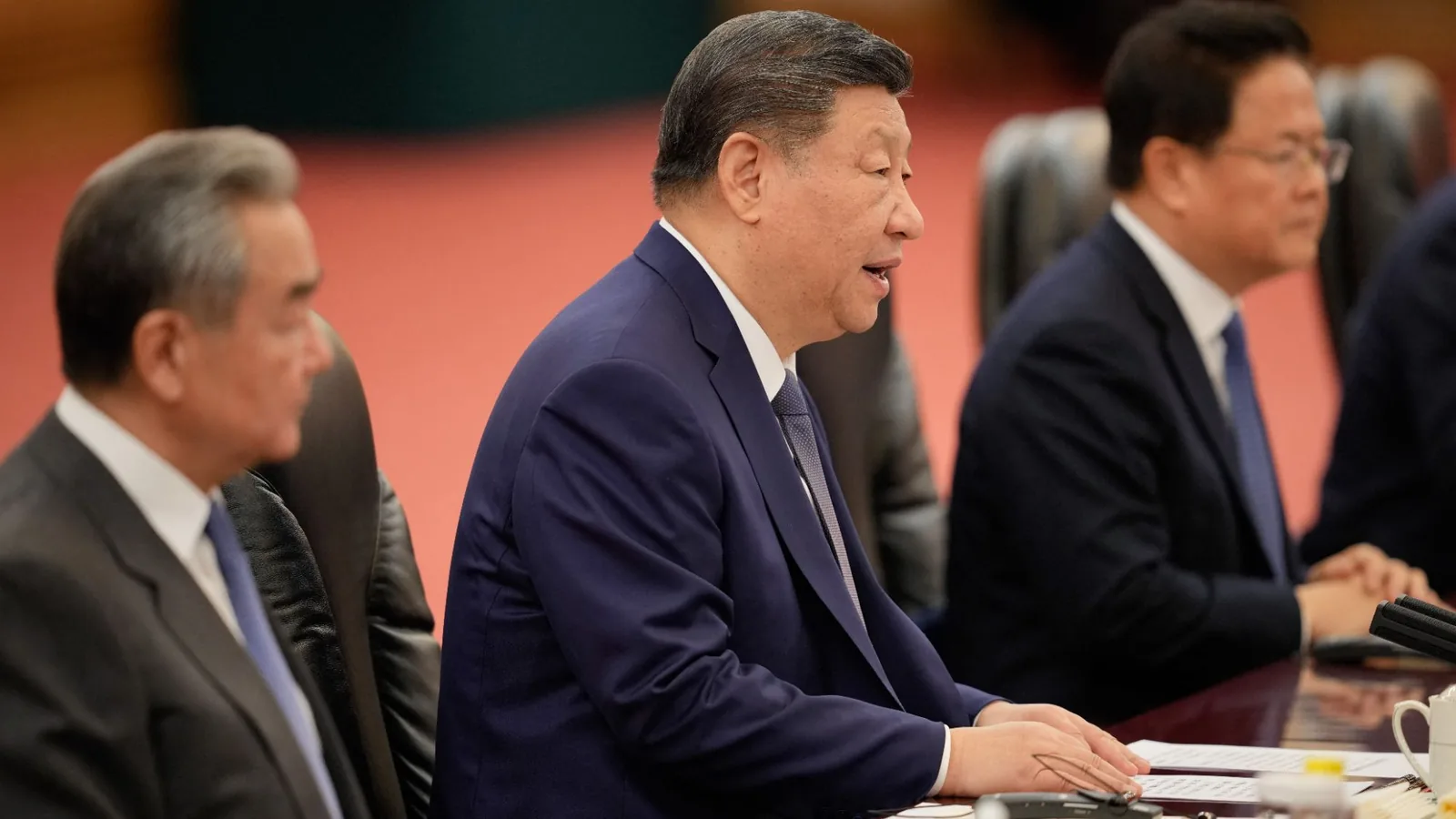
The Trump administration extended US export controls on high-end AI accelerators, including Nvidia Blackwell chips, to cover large-scale rentals to countries on the D:5 arms-embargo list. China Commerce Ministry said it will take countermeasures to safeguard sovereignty, security and development interests. The move lands days before President Trump meets President Xi Jinping on Thursday, Nov. 19 during the APEC summit in Shenzhen.
Licenses for rentals and five transit hubs
The updated rule requires licenses for renting those chips in large quantities to the entirety of the D:5 countries list, closing a loophole that let restricted buyers access compute without buying hardware. The US Department of Commerce also now requires a license for sales to Indonesia, Malaysia, Singapore, Thailand and Brazil, on suspicion that firms there import Blackwell cards for resale to China. Nvidia cut off about half of its Asian buyers last July and told data center operators that over 50% of their business must come from non-Chinese companies.
Both countries agreed a temporary trade truce in Oct. 2025 after months of tariffs and restrictions, but only some measures were lifted. Chinese semiconductors still face a 50% tariff when imported into the US. Malaysia and Singapore have intensified scrutiny of AI hardware shipments amid suspicions around diversion. Tom's Hardware also cited claims linking former Nvidia executive Jensen Huang and Alice Huang of Singaporean firm Megaspeed to alleged diversion of Blackwell chips worth billions to Chinese AI labs, a claim presented as suspicion rather than proven fact.
Why workers and investors should watch Shenzhen
For tech workers, cloud customers and investors, the rental rule matters because access to AI compute, not just chip ownership, now determines who can train and run large models. Tighter licensing for intermediaries in Southeast Asia and Brazil could raise compliance costs for data centers and delay capacity for startups dependent on rented GPUs. Another round of tariffs or export retaliation would add volatility to US stocks, which the source notes are already unsettled by the diversion allegations and trade uncertainty.
China has not specified its countermeasures, and analysts cited expect a cordial summit despite the timing. Beijing previously restricted gallium, germanium and antimony sales to the US, a measure shelved until Nov. 2027 under the truce. Its leverage over rare earth exports expires Jan. 10, 2027, while restrictions on super-hard materials and high-density lithium batteries for EVs and storage also pause early next year. The story does not prove a new trade war has started, nor that domestic production led by Huawei can replace restricted compute.
// Read next
AI labs near cryptography breakthrough as expert panel prepares statement
A 21-expert cryptography panel lists a forthcoming statement as researchers point to an AI breakthrough in theoretical …
Musk: Google Wants to Rent More Computing Capacity From SpaceX
Elon Musk says Google is interested in renting additional computing power from SpaceX, a signal of how tight AI infrast…
RTX 5090 Cable Melt Triggers Air Quality Alarm in PC Owner Room
A Reddit user says a melting 12+4-pin cable on a Gigabyte RTX 5090 filled the room with particles and damaged the GPU p…
YouTuber builds working USB graphics card for 20 cents
Bitluni turned a 13-cent CH570 microcontroller into a monochrome USB graphics card using PWM video tricks and SRAM cach…