US says China intelligence secured banned Nvidia AI chips
US intelligence links China’s security ministry to a two-year effort to obtain restricted Nvidia GPUs, prompting new data center and transit rules.
AIXVZ
AI agents that sell for you. AIXVZ builds sales agents and automates routine business processes — from first contact to deal.
Learn more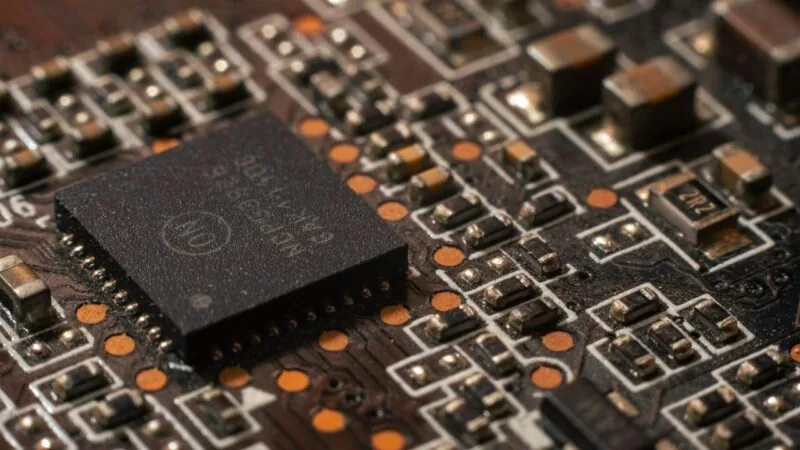
US intelligence assessments say China obtained advanced American AI chips despite export controls, pointing to a campaign by the Ministry of State Security to acquire restricted Nvidia GPUs. Analysts estimate between 7,000 and 22,000 Blackwell-series chips may have been used in Chinese AI training runs. The finding matters because the same hardware underpins AI infrastructure, cloud capacity and chip supply chains that investors and technology workers rely on.
Nvidia GPUs at center of smuggling claims
The assessments describe an effort dating to late 2024 and led by Chen Yixin, who heads the Ministry of State Security. Rather than isolated purchases, the ministry allegedly coordinated help for Chinese companies seeking chip technology and collected intelligence on global supply chains that move the hardware. The principal target was Nvidia graphics processing units, which handle parallel calculations required to train large AI models and are subject to strict US export controls. Independent analyses cited hardware fingerprints consistent with Nvidia B200 and GB200 Blackwell chips in leading Chinese models. Models linked to DeepSeek, Moonshot AI and Ant Group were named in the findings, suggesting a systematic attempt to work around US limits. Public records also show Chinese military procurement involving Nvidia A100 and H100 chips, with hundreds of tenders issued between 2019 and 2025.
Washington responded with tighter trade rules on November 16, 2026. The Trump administration said overseas data centers serving Chinese entities would require licenses and restricted shipments through intermediary countries including Singapore and Malaysia. The measures target procurement networks suspected of diverting advanced chips to China. Singapore-based Megaspeed International is under scrutiny after significant purchases of Nvidia hardware, with the US Commerce Department investigating diversion networks tied to those purchases. That investigation has reportedly found potential links to facilities connected to the People’s Liberation Army. The shift frames the issue as a state-directed intelligence operation rather than profit-driven smuggling by middlemen, raising questions about enforcement, customs controls and oversight of transit hubs and foreign data centers.
What tighter chip controls mean for markets
For readers watching technology and money, the practical effect runs through supply, compliance and costs. Stricter licensing for foreign data centers and transit routes can increase paperwork and scrutiny for cloud providers, chip distributors and firms operating in Singapore and Malaysia. Companies using Nvidia hardware may face longer checks on customers and end users, while institutions exposed to AI infrastructure could see project delays if access to high-end GPUs is constrained. The case also highlights security risks around hardware provenance, an issue relevant to crypto mining operations, decentralized computing networks and data-center investors that depend on transparent equipment sourcing. None of this changes the function of existing chips already in use, but it signals higher regulatory attention on where advanced computing capacity is built and who can use it.
This account rests on US intelligence assessments and independent hardware analyses, not a court finding against the named companies. It does not prove how each chip moved, who authorized specific transactions, or whether the Commerce Department investigation will confirm links between Megaspeed International and military facilities. Firms and data centers outside the named entities and transit countries are not directly affected by the described measures. Enforcement of the November 2026 licensing rules remains the open question.
// Read next
FT: Russian VC revealed as multibillion-dollar Tether co-owner
Vitaly Bezrodnykh, founder of Fulgur Ventures, holds a previously undisclosed multibillion-dollar stake in Tether, per …
Binance wins conditional approval for Bhutan regional hub
Binance received in-principle approval from Bhutan’s Gelephu Central Bank to build an Asia hub, weeks after a $6.3 bill…
Bitcoin and gold are 2026's worst-performing major assets
Bitcoin is down 32% in 2026 and gold 16%, placing both at the bottom of the year's major-asset rankings — a pairing mar…
Kalshi fights states over prediction market taxes and gambling rules
New York, New Jersey and Kentucky are testing whether federal oversight shields Kalshi from state gambling laws as Bern…