Bitcoin and gold are 2026's worst-performing major assets
Bitcoin is down 32% in 2026 and gold 16%, placing both at the bottom of the year's major-asset rankings — a pairing market analysts call unprecedented.
AIXVZ
AI agents that sell for you. AIXVZ builds sales agents and automates routine business processes — from first contact to deal.
Learn more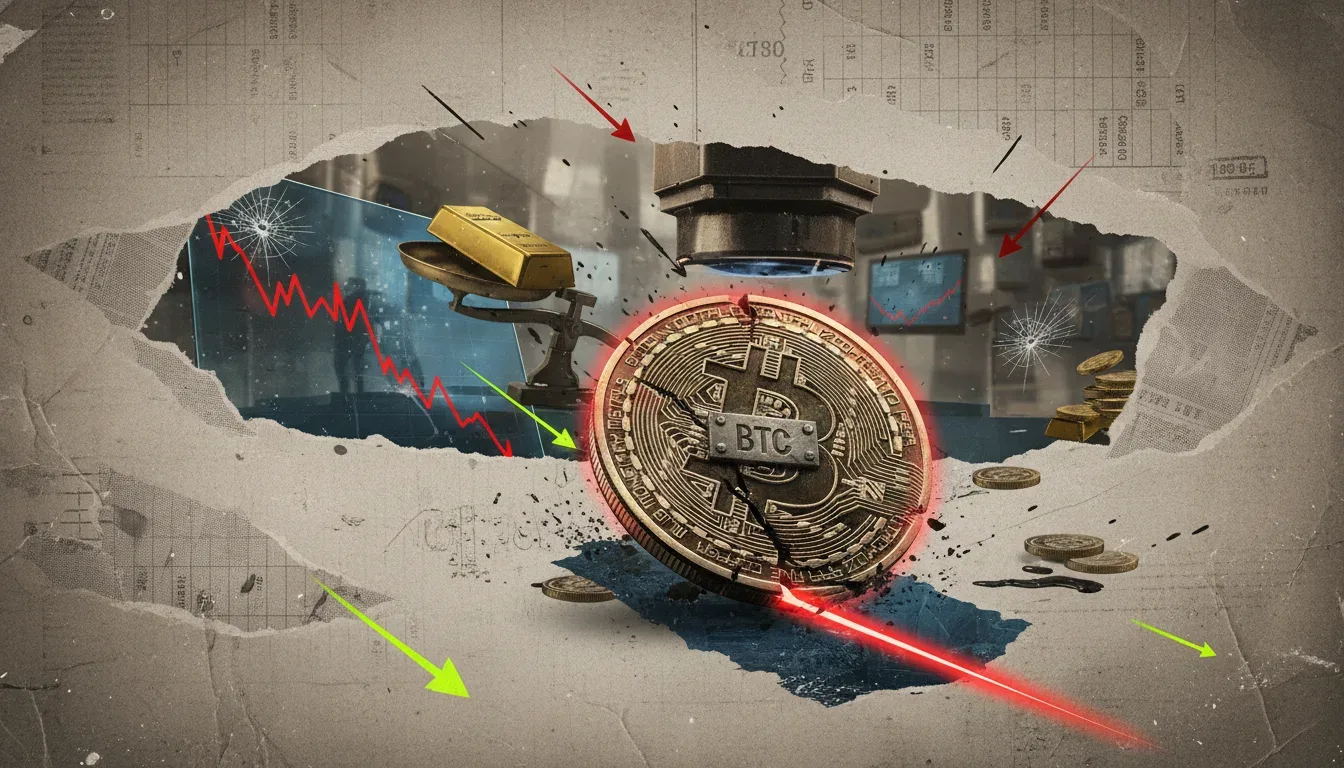
Bitcoin has shed 32% of its value in 2026, and gold is down 16%, leaving both at the bottom of the table among the year's major assets. Market data highlighted this week describes the combination as unprecedented: the largest cryptocurrency and the oldest store of value are falling in tandem rather than offsetting each other.
The result undercuts the two standard arguments investors use for owning either asset. Gold is typically bought as protection when risk appetite fades, while bitcoin is held as a high-beta bet on adoption and liquidity. A year in which both sit deep in the red suggests something broader than a simple rotation between risk-on and risk-off positioning — most likely conditions that force selling across asset classes at once.
The contrast with bitcoin's own history is stark. Exactly nine years ago it traded above $10,000 for the first time, a milestone that shaped a decade of expectations about where the asset could go.
The drawdown is already reshaping the industry built around the network. One miner is shutting down its remaining bitcoin operations, citing rising electricity costs and weaker prices, and is pivoting toward AI and high-performance computing while working through a liquidity crunch.
What it means: a 32% annual loss alongside a 16% drop in gold makes the "digital gold" pitch harder to sell to allocators, and complicates treasury and hedge strategies built on the assumption that the two assets move independently. With miners redirecting capital toward AI infrastructure, the sector's next test is whether the selloff stabilizes before more capacity leaves the network.
// Read next
Binance wins conditional approval for Bhutan regional hub
Binance received in-principle approval from Bhutan’s Gelephu Central Bank to build an Asia hub, weeks after a $6.3 bill…
Kalshi fights states over prediction market taxes and gambling rules
New York, New Jersey and Kentucky are testing whether federal oversight shields Kalshi from state gambling laws as Bern…
Uniswap claims $500 million volume on Elysium layer 2
Uniswap says it passed $500 million in volume on Elysium, but on-chain trackers show about $218 million, raising questi…
Binance adds Hong Kong stocks, ETFs in traditional finance push
The crypto exchange is widening its global platform beyond digital assets, planning to offer trading in Hong Kong-liste…