Uniswap moves to unlock $300,000 in stuck fees on X Layer
Uniswap disclosed that fees on X Layer could not trigger UNI burns because the bridge rejected transfers, and proposed a new release auction.
AIXVZ
AI agents that sell for you. AIXVZ builds sales agents and automates routine business processes — from first contact to deal.
Learn more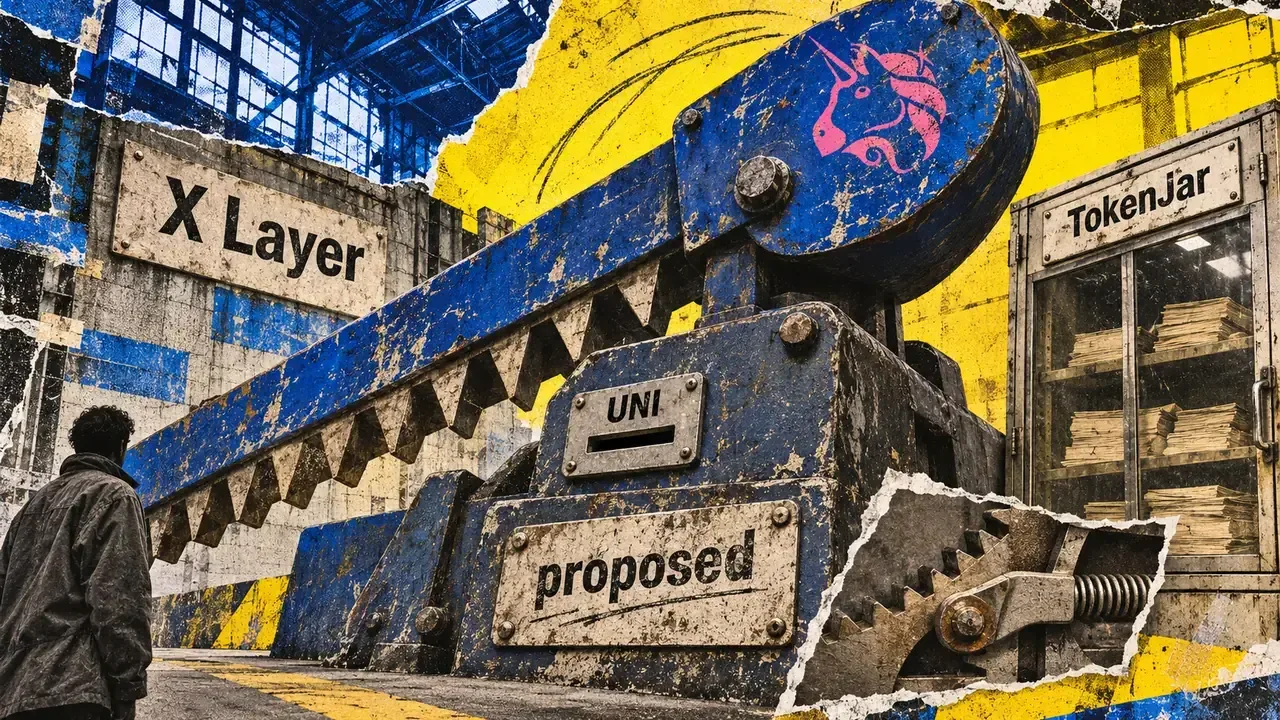
Uniswap Labs disclosed on Nov. 6 that protocol fees had been accruing on X Layer without corresponding UNI burns, with around $300,000 potentially stranded. The cause was a bridge mismatch: the installed relayer followed the OP Stack pattern, but X Layer rejects ERC-20 transfers including UNI. The fix matters because fee collection and UNI burns stopped on that network until a new route is installed.
Bridge mismatch blocked burns and backlog grew
Uniswap collects protocol fees through a TokenJar contract that holds selected fee assets. Outside traders called searchers supply UNI in exchange for those assets, and that UNI payment goes toward burning UNI. The searcher keeps any recoverable value above its UNI payment and execution costs. Converting accrued fees into a completed burn therefore requires a searcher to execute the exchange and a working bridge to settle it. On X Layer, governance messages use the OP Stack bridge while token transfers use Agglayer. The installed relayer used the usual OP Stack token-bridging pattern, which X Layer does not accept for tokens. Proposal 95 records execution on March 8, including X Layer fee-activation actions. The edited description of implementation PR 167, opened Nov. 2, estimates roughly $300,000 in fees could be swept into the jar. Collection requires explicit calls for v3 and v4 fees, so a wallet balance alone does not capture everything accrued.
Strata Terminal reported $7.8 million in UNI burns over the 30 days to Nov. 15, and 14.1 million UNI in recurring burns overall, separate from a one-time 100 million UNI treasury burn. That recurring flow puts the one-time X Layer backlog in context, although the source notes the $300,000 estimate uses a different date and valuation method and cannot be directly converted into burn flows. The proposed replacement releaser would use X Layer token-transfer route to complete the burn. Implementation reviews on Nov. 13-14 describe a higher initial UNI payment intended to reduce the windfall for the first trader who clears the backlog. Restarting with the existing 2,000 UNI payment could hand the accumulated assets to the first searcher at that fixed price, according to PR 167. The economic test of the repair is how much UNI the release payment ultimately sends to the Ethereum burn address.
Auction would start high, then fall to floor price
PR 167 describes an initial threshold of 80,000 UNI, a 2,000 UNI floor and a two-day half-life, with about 10.8 days estimated to reach the floor. The mechanism starts with an expensive claim and lowers the required payment over time. A searcher can act when recoverable assets justify the payment and costs, so competition could direct more backlog value into UNI payments rather than leaving the margin created by a low fixed threshold. Governance would start the decay after the TokenJar points to the new releaser. Anyone could update the threshold, and searchers could bundle that update with a release. The setter would temporarily own the releaser, returning ownership and threshold control to governance on the first update at the floor. The reviewed design removes a separate reclaim function, so elapsed time alone would not restore control.
The proposed schedule remains inconsistent across published plans: the Nov. 6 forum post says roughly six days after execution, while the reviewed implementation describes about 10.8 days. As of Nov. 15, PR 169 combined implementation remained a draft, listing the setter and replacement releaser deployment as blockers. The releaser and setter PRs remained open, while the official deployment registry still listed X Layer original releaser. The release does not require Uniswap itself to buy UNI on the open market at that moment, because the searcher surplus is separate from the burn payment.
// Read next
FT: Russian VC revealed as multibillion-dollar Tether co-owner
Vitaly Bezrodnykh, founder of Fulgur Ventures, holds a previously undisclosed multibillion-dollar stake in Tether, per …
Binance wins conditional approval for Bhutan regional hub
Binance received in-principle approval from Bhutan’s Gelephu Central Bank to build an Asia hub, weeks after a $6.3 bill…
Bitcoin and gold are 2026's worst-performing major assets
Bitcoin is down 32% in 2026 and gold 16%, placing both at the bottom of the year's major-asset rankings — a pairing mar…
Kalshi fights states over prediction market taxes and gambling rules
New York, New Jersey and Kentucky are testing whether federal oversight shields Kalshi from state gambling laws as Bern…