Ukraine downs jet-powered Shahed drone with 4kW Blysk laser
Ukraine says its Blysk laser shot down a jet-powered Shahed on November 19, a first combat test for the 4kW system protecting critical infrastructure.
AIXVZ
AI agents that sell for you. AIXVZ builds sales agents and automates routine business processes — from first contact to deal.
Learn more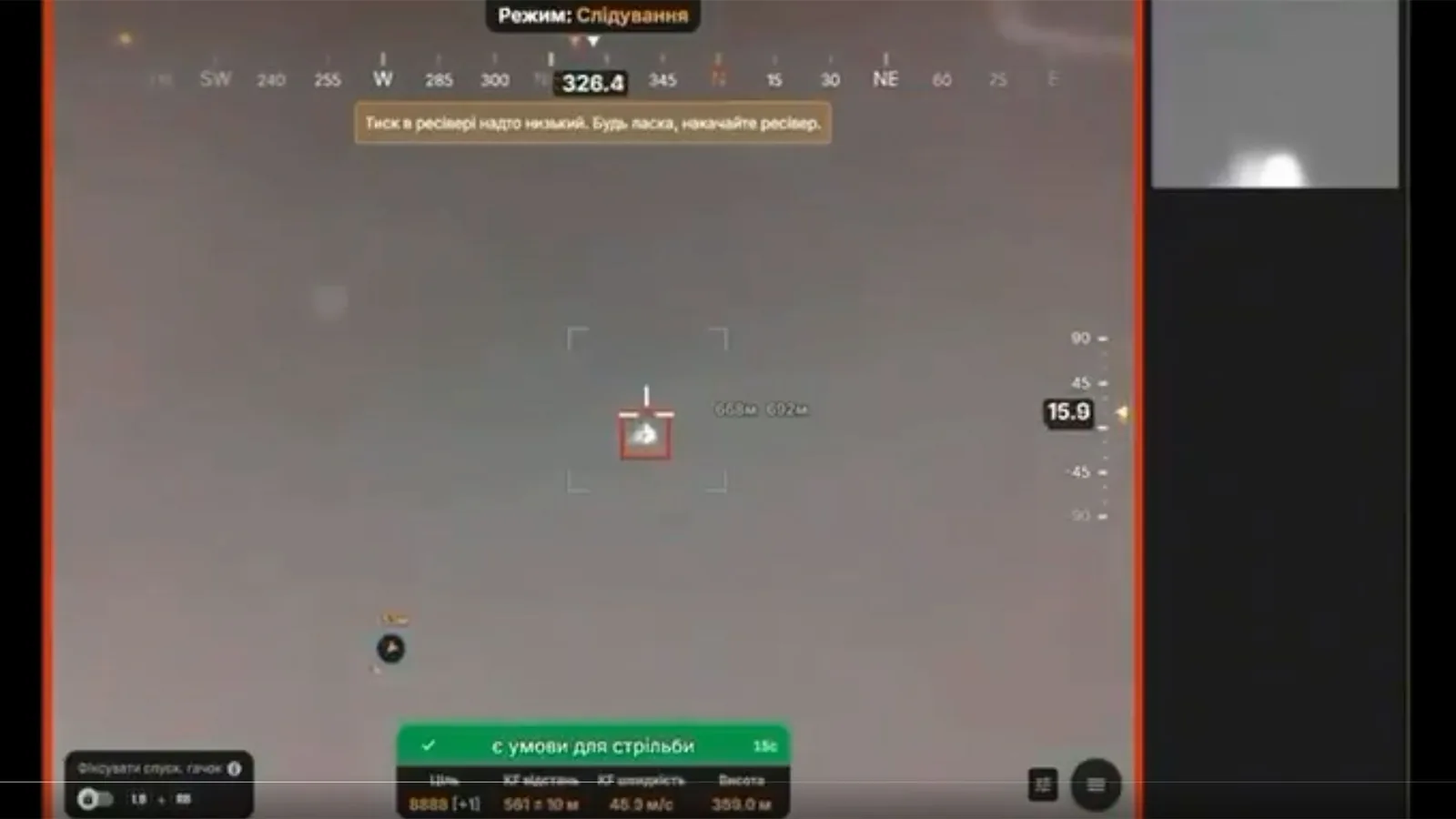
Ukraine has shot down a Russian jet-powered Shahed drone with the Blysk air-defense laser, the first combat kill for the system developed by defense company Carmine Sky. The 4-kilowatt weapon was deployed on November 19 to protect critical infrastructure and destroyed the fast target within days of testing, a result with direct implications for the cost of air defense.
Blysk test and first jet-drone kill
The interception was reported by the Kyiv Independent and supported by a Telegram post with video from Serhii Flash Beskrestnov, the defense tech advisor to President Zelensky. Beskrestnov said the Blysk is currently being tested in active duty to defend an unnamed critical infrastructure facility. The target was one of the speedy new jet-powered drones Russia has begun to deploy, described as Russian Geran adaptations of the Iranian Shahed design, including iterations dubbed Geran-2, Geran-5 and others. Despite confirming the kill, Beskrestnov said it is still too early to discuss serial production of the laser. He added that Carmine Sky is not alone, saying several companies in Ukraine are working on laser defense technology, which he described as highly complex and capital-intensive.
Lasers have drawn interest from multiple militaries as anti-drone weapons because development is expensive but each shot is cheap. Firing a pulse of energy is far less costly than launching a missile, a key factor when defending against large numbers of attack drones. The report puts Blysk power output at 4kW, with a cost per shot probably in the same range as the United Kingdom DragonFire laser weapon, for which energy consumption per shot has been claimed at roughly 10 pounds, or about 13 dollars. The source report also noted that weather has not been ideal for laser defenses recently, with persistent cloud cover and fog. Unlike missiles and bullets, cloud cover can seriously weaken a laser beam before it reaches its target, so lasers will likely augment rather than replace kinetic air defenses.
What cheaper interceptions change for defense
For workers and budgets behind critical infrastructure, the practical issue is cost per interception. Jet-powered Shaheds are harder to catch because of their speed, and stopping them with missiles consumes expensive stockpiles. A laser that can destroy such targets for a few dollars of electricity would lower the marginal cost of defense and allow missiles to be reserved for other threats. It could also change shift planning at power plants, transport hubs and industrial sites, where protection depends on sustained coverage rather than single interceptions. Other countries pursuing similar programs point in the same direction, toward layered defense in which lasers handle suitable drone targets and guns and missiles cover the rest.
The story does not prove that lasers are ready for wide deployment. It describes one test system, in one location, after only a few days of active-duty testing, and serial production is explicitly not yet under discussion. Weather limits, range, power scaling and performance against swarms remain unknown, and the facility protected was not named. The result affects Ukraine air defense and companies developing the technology, not civilian devices, jobs outside defense and infrastructure, or health.
// Read next
AI labs near cryptography breakthrough as expert panel prepares statement
A 21-expert cryptography panel lists a forthcoming statement as researchers point to an AI breakthrough in theoretical …
Musk: Google Wants to Rent More Computing Capacity From SpaceX
Elon Musk says Google is interested in renting additional computing power from SpaceX, a signal of how tight AI infrast…
RTX 5090 Cable Melt Triggers Air Quality Alarm in PC Owner Room
A Reddit user says a melting 12+4-pin cable on a Gigabyte RTX 5090 filled the room with particles and damaged the GPU p…
YouTuber builds working USB graphics card for 20 cents
Bitluni turned a 13-cent CH570 microcontroller into a monochrome USB graphics card using PWM video tricks and SRAM cach…