Training AI on Lao translations wiped out its Thai skills
Together AI showed that adding Thai examples alongside Lao training fixed script errors and kept both translation scores high.
AIXVZ
AI agents that sell for you. AIXVZ builds sales agents and automates routine business processes — from first contact to deal.
Learn more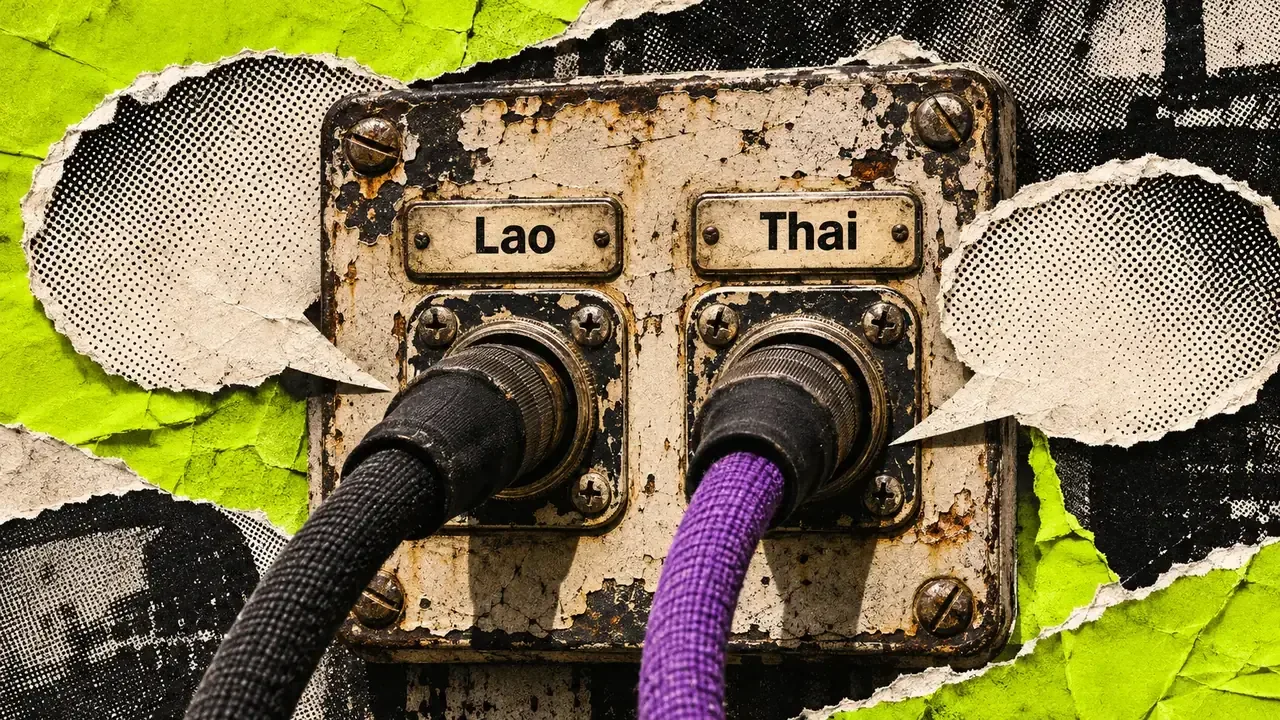
Together AI found that teaching the Qwen3.8-27B model to translate English into Lao made it lose its ability to write in Thai. Training on 945 human Lao translations lifted its Lao score to 44.7 but cut its Thai score from 46.7 to 5.3. The result matters because fixing one low-resource language can quietly damage a closely related one.
Human data fixed Lao but erased Thai script
Together AI published the results on Nov. 26 after asking Qwen3.8-27B to translate English sentences into Lao and finding that it often answered in Thai. The base model used mostly Lao letters in just 11% of its Lao test responses. After training only on human Lao translations, the model scored 44.7 on the Lao test, the highest score among the Qwen versions in the report. On the 300-sentence Thai test it scored 5.3, compared with 46.7 for the original model. None of its responses to the Thai prompts used Thai script.
Both tests used chrF++, a 0-to-100 score based on how closely characters and words match a human translation. The Lao evaluation used 1,012 held-out sentences from the FLORES-200 benchmark. The team also counted how many responses used mostly Lao letters as a separate script check. A second approach used translations generated by another AI model, Kimi-K3.1-Pro. One Qwen version trained on 965 Lao examples scored 41.8 on Lao, while another trained on the same number of Lao examples plus 989 Thai ones scored 41.9. On Thai, the mixed version scored 47.4, compared with 44.3 for the Lao-only version.
Why mixed training kept both languages intact
For a normal user, the lesson is about checking side effects rather than a single score. Ranking the Qwen versions by Lao translation scores alone would have put the model trained only on human Lao translations first. Testing both languages showed why the mixed run was a better choice for a model that needed to translate into either one. The larger mixed run used mostly Lao script on every Lao test sentence and scored 47.8 on the separate Thai test. That combination preserved existing function while adding the new skill.
The report does not show that more data always solves the problem or that the fix works for other language pairs. Together AI then increased Lao training data to 3,834 examples while keeping the same 989 Thai examples, with the Lao score rising from 5.5 in the original model to 44.3. The evaluation covered written translation of held-out sentences only, not speech, long documents or live use. The findings apply to this Qwen setup and these Lao and Thai test sets, not to translation quality in general.
// Read next
FT: Russian VC revealed as multibillion-dollar Tether co-owner
Vitaly Bezrodnykh, founder of Fulgur Ventures, holds a previously undisclosed multibillion-dollar stake in Tether, per …
Binance wins conditional approval for Bhutan regional hub
Binance received in-principle approval from Bhutan’s Gelephu Central Bank to build an Asia hub, weeks after a $6.3 bill…
Bitcoin and gold are 2026's worst-performing major assets
Bitcoin is down 32% in 2026 and gold 16%, placing both at the bottom of the year's major-asset rankings — a pairing mar…
Kalshi fights states over prediction market taxes and gambling rules
New York, New Jersey and Kentucky are testing whether federal oversight shields Kalshi from state gambling laws as Bern…