Tether backs Lemon wallet that settles Visa cards in USDC
Tether invested $14.5 million in Argentine fintech Lemon to expand USDT and gold token use, even as Lemon settles Visa purchases in rival Circle’s USDC.
AIXVZ
AI agents that sell for you. AIXVZ builds sales agents and automates routine business processes — from first contact to deal.
Learn more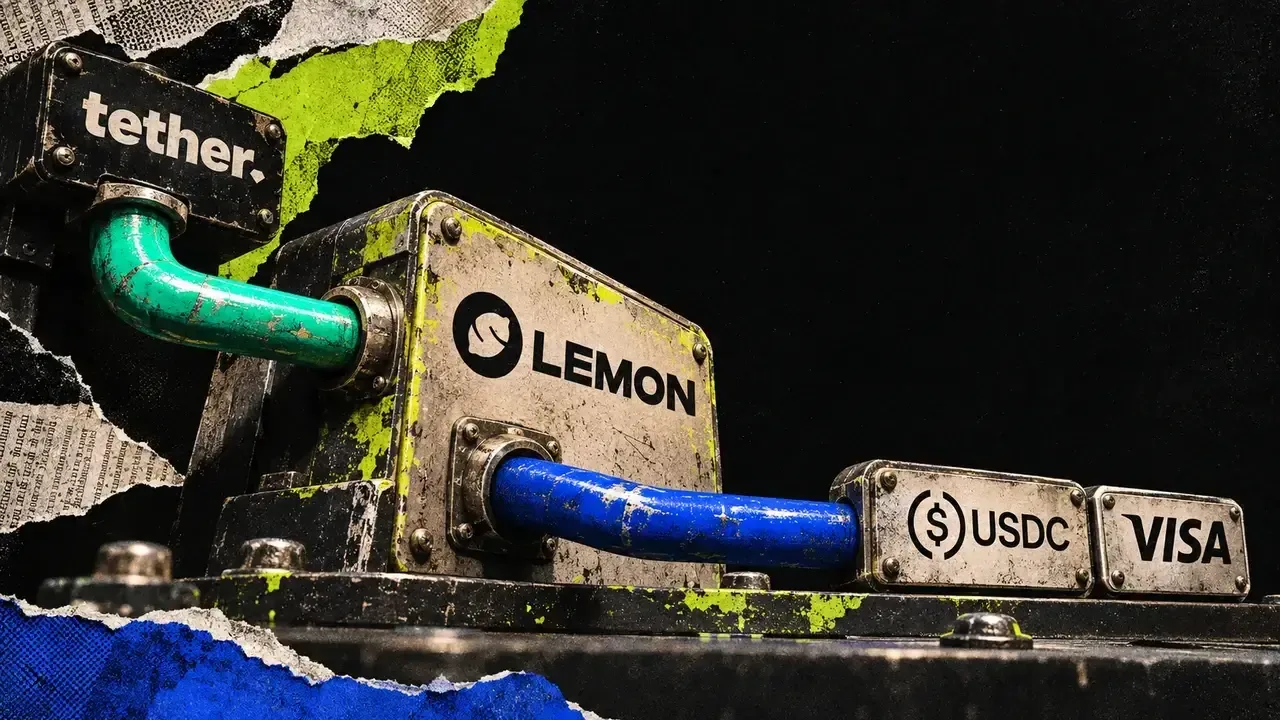
Tether said on Nov. 25 it invested $14.5 million in Argentine fintech Lemon to expand use of USDT and its tokenized gold XAUT in Latin America. Lemon chief executive Marcelo Cavazzoli told Forbes Argentina the package includes $5 million in equity and $9.5 million in incentives to develop products together. The deal matters because Lemon already settles international Visa card payments in rival Circle’s USDC.
Visa settlement runs on USDC, balance on USDT
On April 21, Lemon said international purchases on its physical and virtual Visa prepaid cards in Argentina would settle in Circle’s USDC, whether customers paid from pesos, digital dollars or another asset. In Visa’s general model for direct stablecoin settlement, an issuer can pay Visa in a supported token, and Visa’s custodian converts the funds to fiat to pay merchants. Lemon’s June card guide lists a charge of one USDT per U. S. dollar for regular foreign-currency purchases funded from the app’s Digital Dollar balance, while funding with Ethereum or Bitcoin carries a 0.3% commission.
Lemon’s June Digital Dollar guide describes a single balance that brings together USDT, USDC and USDS on a one-for-one basis. Customers can keep the stablecoin in the app, send it to an Argentine bank, or spend it from their balance. Transfers from U. S. banks are credited in USDT, while users sending to a crypto wallet can choose the receiving token and network, with Lemon handling conversion to USDC or USDS. A customer starting with pesos pays a 0.5% commission and buys USDT at 3.5% above the in-app price, and transfer charges can reduce the credited amount.
What the wallet means for money and transfers
For people using Lemon, the practical effect is a dollar balance that sits between a bank transfer and spending. To withdraw to a bank, customers enter the account number for an Argentine dollar account in their own name, see an estimated payout, and receive bank dollars. Chief executive Paolo Ardoino said people in the region are using USDT to get paid, spend and send money across borders. The conversion rate can change while Bridge, its provider, converts funds or while a bank transfer is being processed.
The story does not show how much customers keep in USDT between transactions. Lemon reported more than 151,000 international card purchases during the winter holidays, up 61% from the prior period, but Cavazzoli said more than 85% of volume moving through Lemon was in local currencies. Argentina’s central bank counted 791.6 million instant peso transfers and 122.8 million QR payments in September, leaving the size of the stablecoin balance unclear.
// Read next
FT: Russian VC revealed as multibillion-dollar Tether co-owner
Vitaly Bezrodnykh, founder of Fulgur Ventures, holds a previously undisclosed multibillion-dollar stake in Tether, per …
Binance wins conditional approval for Bhutan regional hub
Binance received in-principle approval from Bhutan’s Gelephu Central Bank to build an Asia hub, weeks after a $6.3 bill…
Bitcoin and gold are 2026's worst-performing major assets
Bitcoin is down 32% in 2026 and gold 16%, placing both at the bottom of the year's major-asset rankings — a pairing mar…
Kalshi fights states over prediction market taxes and gambling rules
New York, New Jersey and Kentucky are testing whether federal oversight shields Kalshi from state gambling laws as Bern…