Supercomputing showdown: AMD, Nvidia pitch AI-ready chips at SC26
At SC26, AMD and Nvidia clashed over CPUs for agentic AI, new GPUs and supercomputer rankings, while Intel, SSD makers and networking researchers showed where high-performance computing goes next.
AIXVZ
AI agents that sell for you. AIXVZ builds sales agents and automates routine business processes — from first contact to deal.
Learn more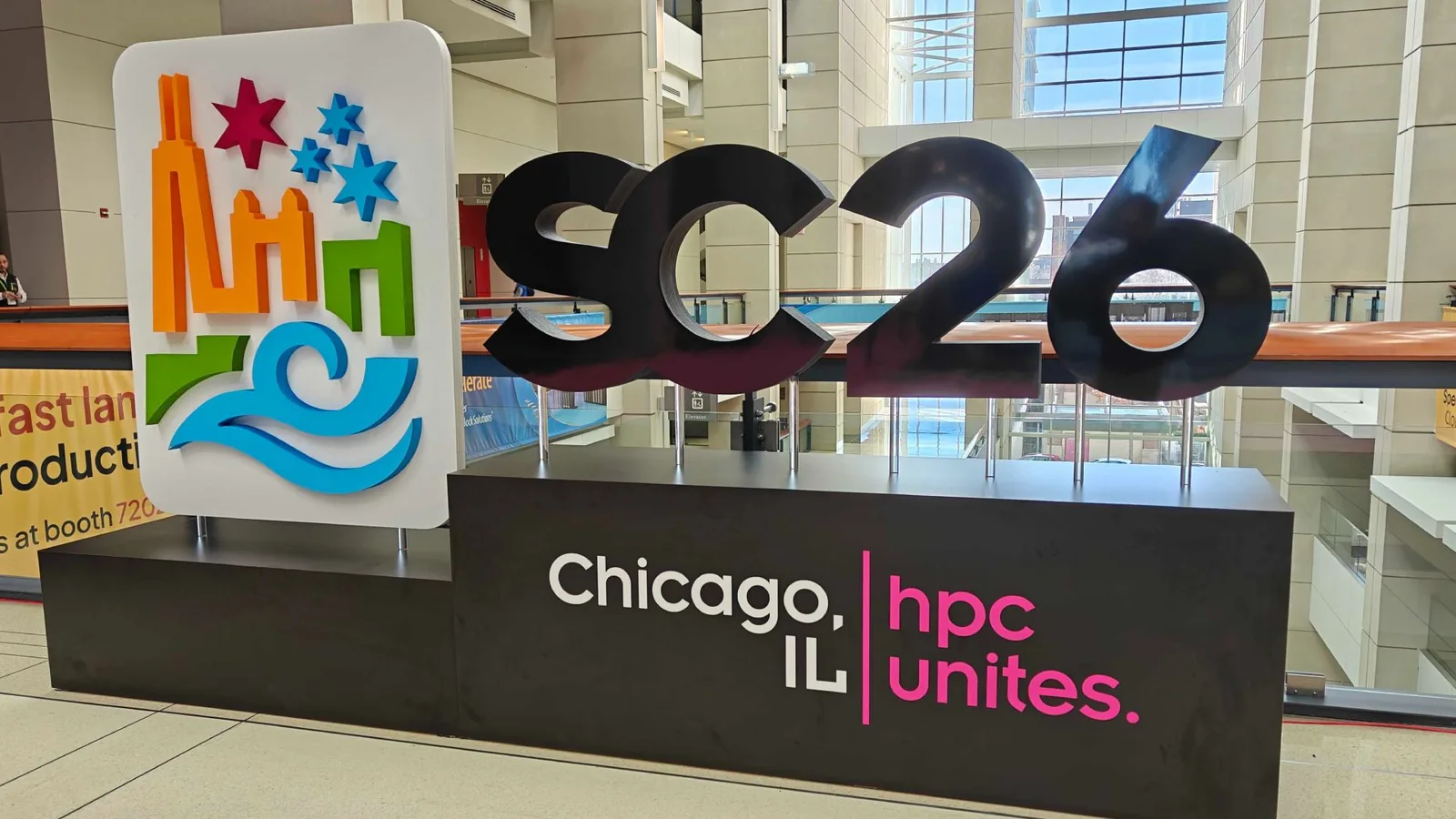
At the Supercomputing conference SC26, AMD and Nvidia used competing CPU claims to frame the future of high-performance computing, with AMD saying its EPYC Venice lineup leads on agentic workloads and Nvidia presenting its Vera CPU and a Rubin HPC GPU variant. AMD now powers over 40% of new TOP500 systems, up 14%, while China’s LineShine system in Shenzhen holds first place. For readers, the takeaway is direct: AI clusters are absorbing hardware, but high-precision science computing is not going away.
Nvidia Vera, Rubin HPC and AMD EPYC claims
Nvidia’s Vera CPU drew attention at SC26 after CPU chief Ian Finder pushed back on Nvidia’s own marketing that described Vera as purpose-built for Agentic AI, calling the idea that Nvidia predicted the data-center moment absurd and crediting design know-how instead. Nvidia also said existing software cannot always use Vera fully without architecture-specific optimization, showing up to 39% performance optimization on some workloads when its Olympus-based Arm cores are taken into account. The company announced Rubin HPC, a Rubin GPU variant for agentic workflows and scientific simulations over large datasets, with over 50,000 CUDA cores, slightly below double the standard Rubin GPU, though technical details remain scant.
AMD’s position in the TOP500 strengthened, with the company featured in over 40% of new list entries, a 14% boost. Its leading new system is Lux, developed with the U. S. Department of Energy, debuting at No. 14 with EPYC CPUs and Instinct MI355X GPUs, while a second system, Discovery, is expected in 2028 with EPYC CPUs and Instinct accelerators. The top 10 systems were unchanged, with LineShine second-place El Capitan remaining second, and the list recorded the fewest new systems in 33 years as AI data centers absorb new hardware. AMD executive Scott Tease said AI will never wholly replace HPC computing and that high-precision workloads will continue, arguing for a heterogeneous compute stack for complex research.
What high-precision and storage shifts mean
For work and money, the dispute over precision matters because it affects cost and suitability of AI hardware for science and engineering. AMD argued its MI430X native FP64 operations beat emulated support in Nvidia hardware, saying Ozaki FP64 emulation fits less than 10% of HPC workloads and can triple memory use, with cascading effects when memory is in short supply. Intel’s Diamond Rapids CPUs appeared at the CXL booth and at Bull installed in a server, without demos, alongside Xeon 6+ and Crescent Island GPU demos. In storage and networking, Silicon Motion demoed the SM8466 PCIe 6.0 controller with PerformaShape 2, Phison detailed enterprise SSD concepts including one with a built-in NPU, and VAST Data and Ohio State researchers addressed petabyte-scale reliability and region-scale networking.
What this coverage does not prove is which architecture will win agentic or HPC tasks, since Vera gains beyond matrix multiplication from Olympus-specific optimization are still unclear and Rubin HPC details are limited. It also does not mean TOP500 rankings capture total compute growth, because most new AI hardware is not tested against that benchmark. The findings matter mainly for data-center planners, researchers and hardware buyers, not for typical laptop or phone users, and SSD controllers, quantum plans and unmanned-fab robotics remain development-stage efforts.
// Read next
AI labs near cryptography breakthrough as expert panel prepares statement
A 21-expert cryptography panel lists a forthcoming statement as researchers point to an AI breakthrough in theoretical …
Musk: Google Wants to Rent More Computing Capacity From SpaceX
Elon Musk says Google is interested in renting additional computing power from SpaceX, a signal of how tight AI infrast…
RTX 5090 Cable Melt Triggers Air Quality Alarm in PC Owner Room
A Reddit user says a melting 12+4-pin cable on a Gigabyte RTX 5090 filled the room with particles and damaged the GPU p…
YouTuber builds working USB graphics card for 20 cents
Bitluni turned a 13-cent CH570 microcontroller into a monochrome USB graphics card using PWM video tricks and SRAM cach…