Photonic Chips Promise Cheaper AI by Computing With Light
German startup Q. ANT is piloting light-based processors with IONOS to cut AI energy costs, claiming complex math can run in a single step alongside GPUs.
AIXVZ
AI agents that sell for you. AIXVZ builds sales agents and automates routine business processes — from first contact to deal.
Learn more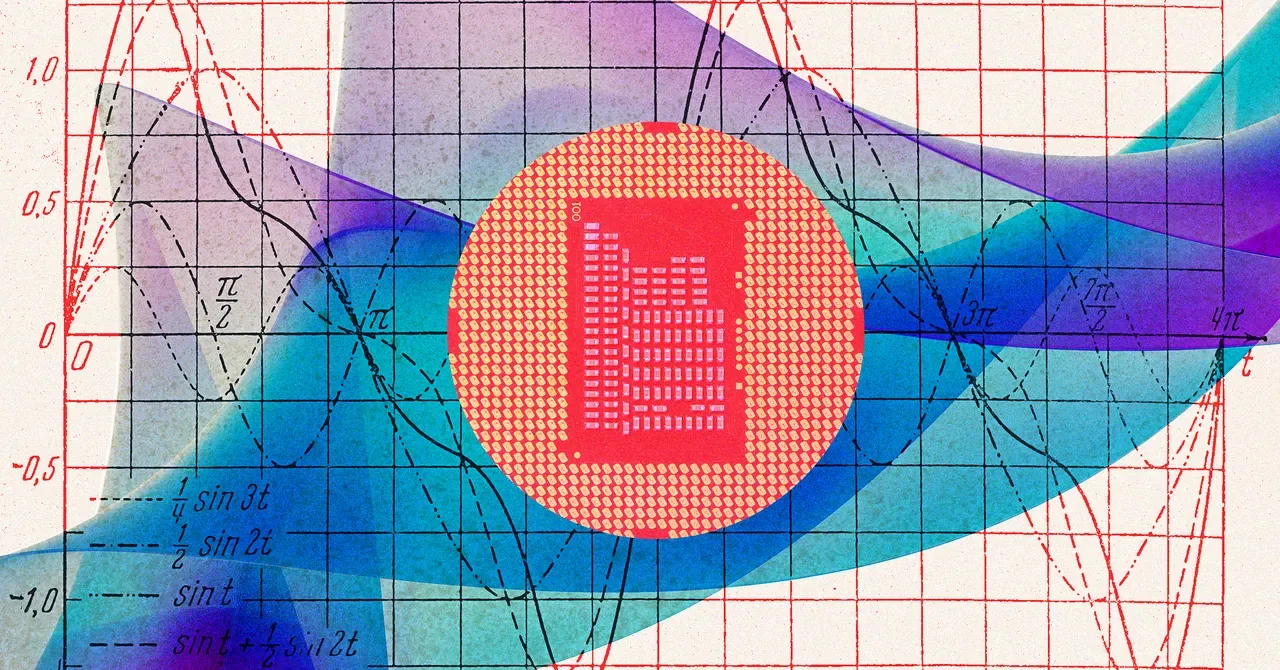
German startup Q. ANT is piloting photonic processors that run AI calculations with waves of light instead of electrons, aiming to curb the soaring energy cost of AI. The chips are now operating in facilities run by cloud company IONOS, where more than 30 engineering teams are developing AI models optimized for photonic computing. Founder and CEO Michael Förtsch told WIRED the approach could cut energy use by four or five times in simulation, though that gain has not yet been shown in real hardware.
How light-based computing differs from GPUs
Whereas regular GPUs move data by shuffling electrons, photonic processors transmit and process data as light waves, which do not generate heat as they travel and allow more data to be processed at once. That design supposedly consumes less energy and requires minimal cooling, one of the largest cost sources for data centers. Q. ANT does not aim to replace GPUs but to run alongside them: linear math with masses of additions and multiplications goes to the GPU, while complex nonlinear calculations go to photonics. Förtsch called Nvidia H200 GPU a masterpiece that is hard to challenge on its own ground.
The efficiency claim rests on memory access, which Förtsch described as the main cost driver today. Photonic hardware can execute complicated math in a single step where regular chips need thousands of steps, reducing data movement and memory access points. He used the sine function as an analogy: because light is itself a wave, it can describe round shapes and complex equations with far fewer data points than linear functions. Q. ANT sees particular strength in images and video, including recognition, segmentation and generation, plus robotics and physical AI.
What cheaper AI compute means for work
For workers and businesses paying for cloud AI, the practical promise is more AI output for less electricity and operating cost if photonics matures. Developers would not need to learn a new language, as existing code in C++ or Python can already run on Q. ANT machines, but models optimized only for GPUs will not automatically run faster and need adaptation. That creates a chicken-and-egg problem: cloud providers want developer demand before building infrastructure, while developers want available hardware before redesigning models. Q. ANT is trying to break that cycle with proof-of-concept systems in data centers to show the technology is robust enough for that environment.
The WIRED interview does not prove that photonic computing will lower AI bills soon. The four to five times energy reduction comes from simulation, not measured hardware, and few photonic processors run in data centers today. Q. ANT says it could fulfill a hypothetical order for 100,000 processors, but its suppliers may not be ready, and building a robust supply chain will take time. The chips use 90 nanometer node technology from the 2000s, which avoids competition for cutting-edge foundry capacity and keeps production cheap, and they are designed to work with any GPU brand rather than a single vendor.
// Read next
AI labs near cryptography breakthrough as expert panel prepares statement
A 21-expert cryptography panel lists a forthcoming statement as researchers point to an AI breakthrough in theoretical …
Musk: Google Wants to Rent More Computing Capacity From SpaceX
Elon Musk says Google is interested in renting additional computing power from SpaceX, a signal of how tight AI infrast…
RTX 5090 Cable Melt Triggers Air Quality Alarm in PC Owner Room
A Reddit user says a melting 12+4-pin cable on a Gigabyte RTX 5090 filled the room with particles and damaged the GPU p…
YouTuber builds working USB graphics card for 20 cents
Bitluni turned a 13-cent CH570 microcontroller into a monochrome USB graphics card using PWM video tricks and SRAM cach…