OpenAI Codex finds two possible planets missed in NASA data
Two amateur astronomers used OpenAI Codex and Astra to scan millions of stars, surfacing two transit signals that passed early independent checks.
AIXVZ
AI agents that sell for you. AIXVZ builds sales agents and automates routine business processes — from first contact to deal.
Learn more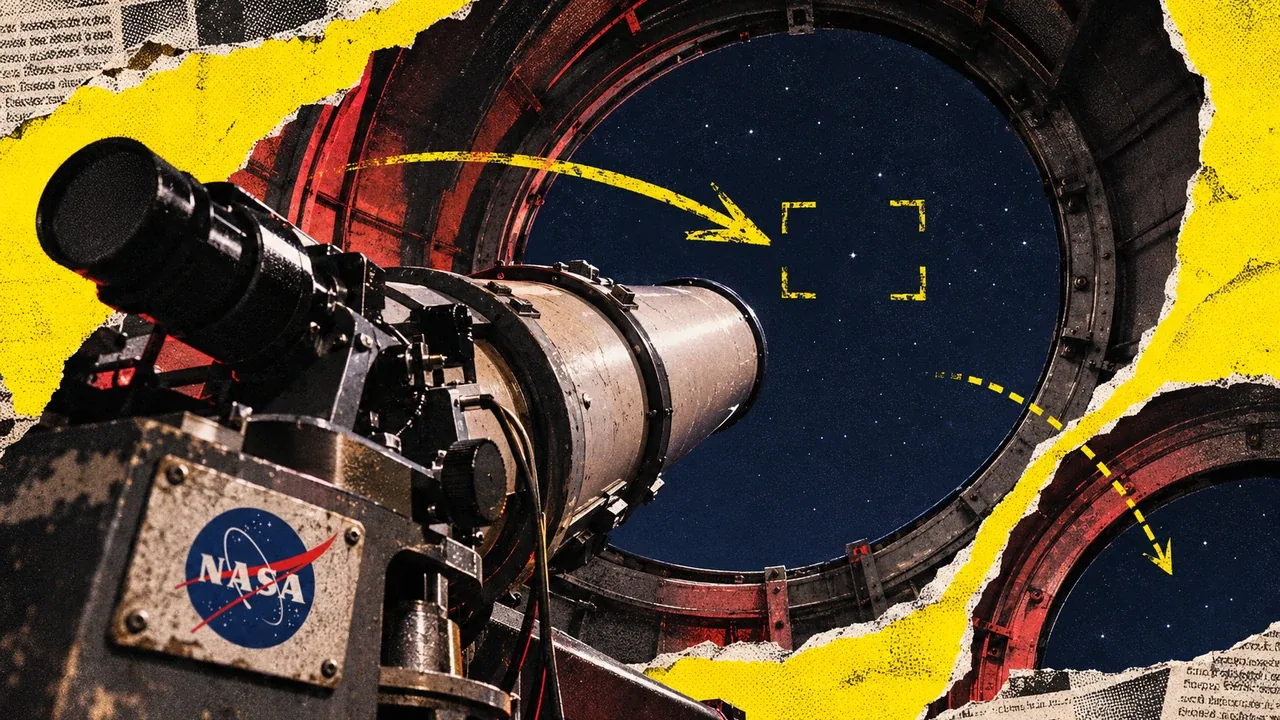
Two amateur astronomers used OpenAI Codex and Astra to search NASA telescope archives covering millions of stars and surfaced two possible planets that earlier searches had missed. A professional astronomer independently recovered both signals, which remain candidates that could take months or years to confirm.
How the search of 100,000 stars worked
OpenAI described the work in a Nov. 24 report focused on Kevin Bond, an OpenAI engineer working as an amateur astronomer, and Ethan Byrd, another amateur astronomer. Bond used Codex to build software that looks for repeated declines in stellar brightness, a pattern that can occur when a planet passes in front of its host star. The program combined existing detection methods and used two AI agents, with one selecting promising signals and the second testing those selections more closely.
Running that software against archived observations of about 100,000 stars from NASA Kepler Space Telescope produced more than 200 signals, including 10 linked to previously confirmed planets. Vishal Gajjar, an astronomer at the SETI Institute, independently recovered two of Bond findings. One concerns KIC 5689121, a relatively cool star dimming every 13.8 days, consistent with a potential planet about 2.4 times Earth diameter. The other concerns KIC 6691030, dimming every 4.8 days, suggesting a potential planet smaller than Neptune.
Why candidates still need months of checks
For a normal reader, the practical point is the difference between a signal and a confirmed planet. Repeated dips in brightness can also come from eclipsing stars or changes in telescope instruments, so astronomers need follow-up observations at the predicted transit times and measurements of whether gravity from a possible planet moves its host star. Gajjar said initial checks were encouraging and follow-up observations would reveal more, which means neither object can yet be treated as a discovery for science, education or investment decisions.
The story does not prove that general-purpose AI has solved planet hunting, nor that the two signals are planets. Byrd separately examined data covering about 19 million stars, including a search for candidates in habitable zones where liquid water could exist, and produced 49 candidates, with one submitted to researchers on NASA Transiting Exoplanet Survey Satellite mission and two awaiting submission. AI-assisted planet identification dates back at least to the 2017 announcement of Kepler-90i using a neural network, so the new result extends an existing method rather than creating a separate confirmation path.
// Read next
FT: Russian VC revealed as multibillion-dollar Tether co-owner
Vitaly Bezrodnykh, founder of Fulgur Ventures, holds a previously undisclosed multibillion-dollar stake in Tether, per …
Binance wins conditional approval for Bhutan regional hub
Binance received in-principle approval from Bhutan’s Gelephu Central Bank to build an Asia hub, weeks after a $6.3 bill…
Bitcoin and gold are 2026's worst-performing major assets
Bitcoin is down 32% in 2026 and gold 16%, placing both at the bottom of the year's major-asset rankings — a pairing mar…
Kalshi fights states over prediction market taxes and gambling rules
New York, New Jersey and Kentucky are testing whether federal oversight shields Kalshi from state gambling laws as Bern…