Medtronic Hugo robot cleared for general surgery in US
FDA clearance lets Medtronic’s Hugo robot handle abdominal procedures covering about 3.5 million US surgeries a year, expanding beyond urology.
AIXVZ
AI agents that sell for you. AIXVZ builds sales agents and automates routine business processes — from first contact to deal.
Learn more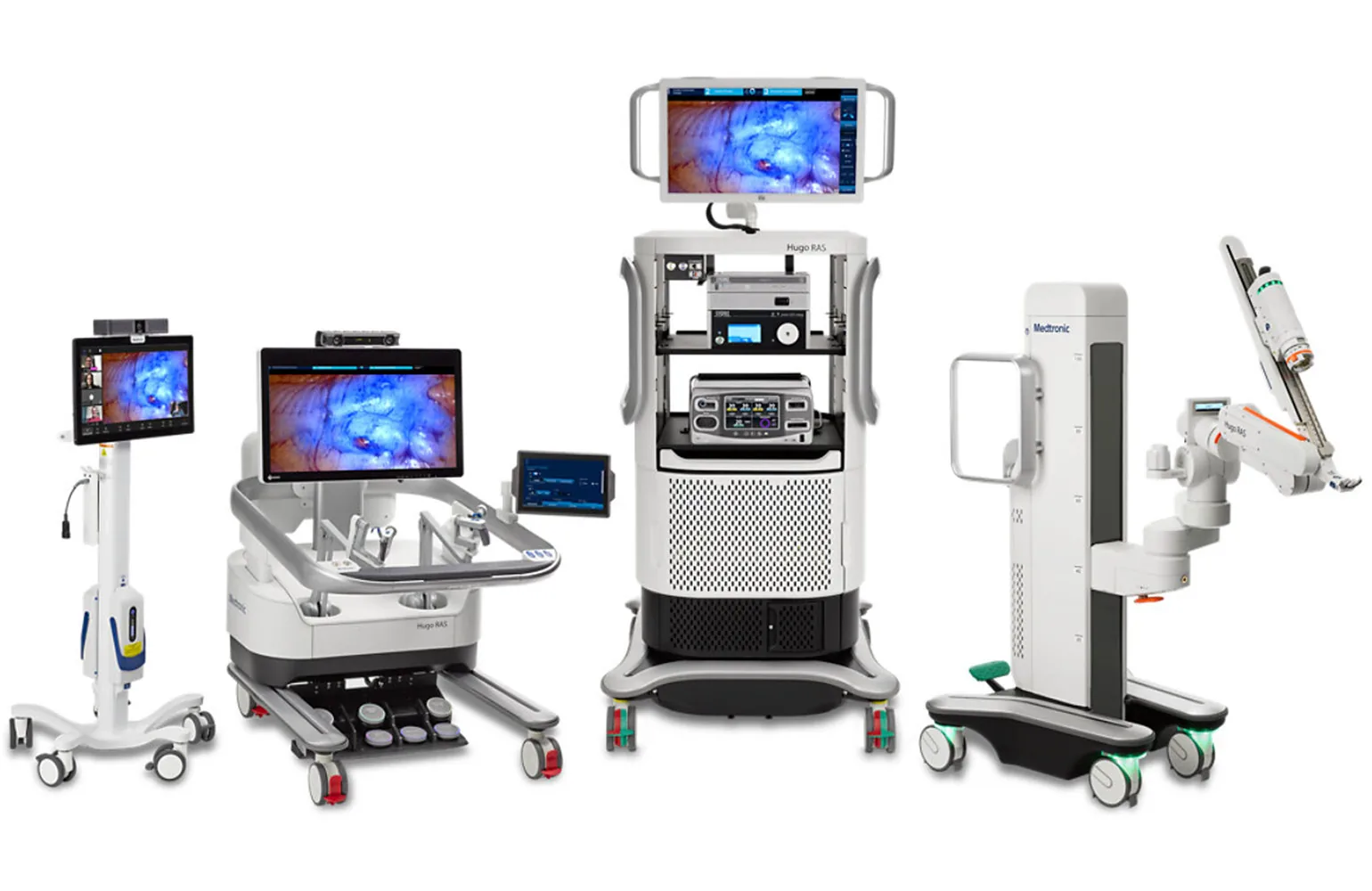
Medtronic said the U. S. Food and Drug Administration has cleared its Hugo robotic-assisted surgery system for general surgery procedures across the abdomen. The clearance covers upper abdominal operations including cholecystectomy, Roux-en-Y gastric bypass, ventral hernia and small bowel resection, plus lower abdominal inguinal hernia and appendectomy. Together those procedures account for about 3.5 million surgeries annually in the U. S., sharply widening Hugo’s addressable market beyond urology.
Hugo expands from urology into abdomen surgery
Medtronic began its U. S. Hugo rollout in February of last year with a urology indication, cleared in December 2025, and is now in many leading hospitals. For general surgery, the company used two pathways: a U. S. clinical trial under an investigational device exemption and clinical data from outside the U. S. It announced in September 2025 that a U. S. hernia repair study met safety and effectiveness endpoints. The company received CE marking for general surgery in Europe in 2022, where general surgery is now its fastest-growing procedural mix for Hugo, ahead of urology and gynecology.
Globally, Hugo is on track to surpass 50,000 cumulative procedures by the end of Medtronic’s fiscal year, the company said. Medtronic pointed to more than fifty years of experience with open and laparoscopic technologies in these surgical areas. General manager Rajit Kamal said many of the newly cleared operations are multi-quadrant procedures, where Hugo’s modular cart-based design offers coverage and flexibility in port placement. The company is also running a U. S. investigational study for gynecology covering radical, modified radical and total hysterectomies, including for malignancies.
What AI guidance and robotics mean for care
For hospitals and surgical staff, wider clearance affects procedure choice, training and support contracts rather than a single device purchase. Robotic assistance lets surgeons operate from a seated console with a magnified 3D image and more precise instruments, compared with standing through long laparoscopic cases. The company’s chief executive for robotic surgical technologies said that ergonomic difference and clearer visualization matter for experienced surgeons and for newer surgeons building skills. Medtronic is pairing Hugo with its Touch Surgery ecosystem, including Touch Surgery Aide, a compute platform cleared in June that uses computer vision and AI to analyze surgical video and provide real-time information.
The clearance does not prove better outcomes than open or laparoscopic surgery for these specific procedures, and it does not cover gynecology in the U. S., which remains investigational. The AI features described for preoperative planning, intraoperative guidance and postoperative recovery are directions of development, not newly cleared autonomous functions. In September Medtronic also invested 700 million dollars in Cornerstone Robotics with distribution rights for its Sentire system in select approved markets outside the U. S., a separate bet that does not change Hugo’s current U. S. status.
// Read next
AI labs near cryptography breakthrough as expert panel prepares statement
A 21-expert cryptography panel lists a forthcoming statement as researchers point to an AI breakthrough in theoretical …
Musk: Google Wants to Rent More Computing Capacity From SpaceX
Elon Musk says Google is interested in renting additional computing power from SpaceX, a signal of how tight AI infrast…
RTX 5090 Cable Melt Triggers Air Quality Alarm in PC Owner Room
A Reddit user says a melting 12+4-pin cable on a Gigabyte RTX 5090 filled the room with particles and damaged the GPU p…
YouTuber builds working USB graphics card for 20 cents
Bitluni turned a 13-cent CH570 microcontroller into a monochrome USB graphics card using PWM video tricks and SRAM cach…