Hackers Hijacked 178 Sites to Swap Crypto Wallet Addresses
Attackers exploited Optimizely to inject address-swapping malware into 178 sites, collecting card data and about $7,040 in Bitcoin.
AIXVZ
AI agents that sell for you. AIXVZ builds sales agents and automates routine business processes — from first contact to deal.
Learn more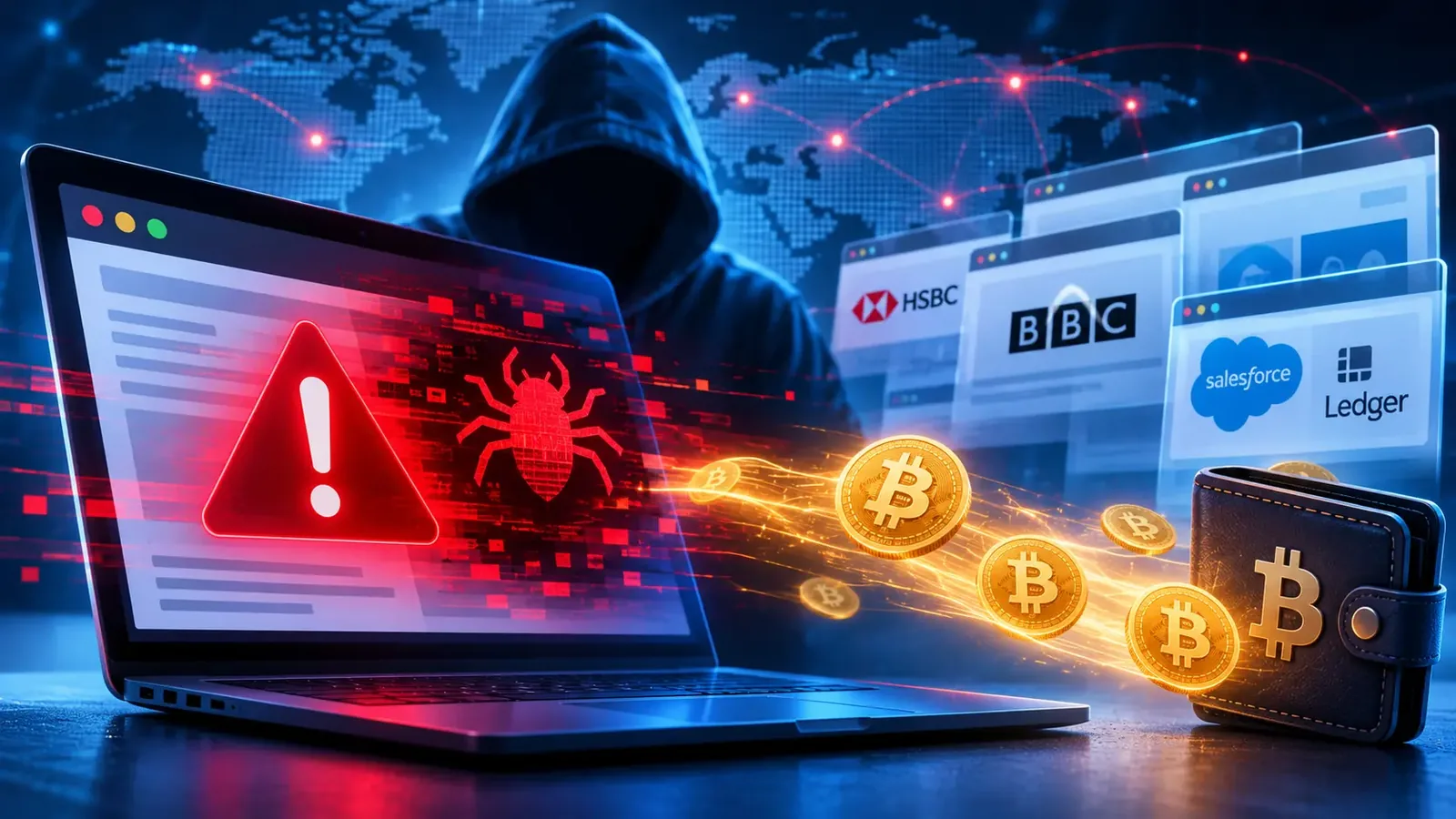
An attacker exploited a flaw in Optimizely’s website optimization platform on November 16 to inject malicious JavaScript into the sites of 178 organizations, including HSBC, the BBC, Salesforce and Ledger. The code swapped displayed cryptocurrency addresses for attacker-controlled ones and harvested card data. The incident matters because visitors were exposed simply by opening a trusted page, with no breach of the site owners themselves.
How Optimizely flaw spread malware to 178 sites
According to cybersecurity firm Report URI, the attacker abused a weakness in Optimizely’s account registration process. Optimizely lets businesses test layouts and content by embedding its JavaScript in their pages, so compromising that shared code allowed malicious instructions to reach every site using it. Optimizely confirmed that an unauthorized party exploited its signup process to insert rogue code into customer projects, then said it removed the payload and fixed the vulnerability. Cybersecurity firm Hudson Rock also found similar code distributed through three other web services, with an earlier wave detected on November 13.
The script targeted Bitcoin, Ethereum, Solana and Tron plus five other blockchain networks, Report URI said. It identified wallet addresses shown on affected pages and replaced them in forms and in text copied to a visitor’s clipboard, so a user could paste the wrong destination into a wallet and approve the transfer. Beyond crypto theft, the code collected payment card numbers entered into forms, copied cookies, captured screenshots and delivered exploit kits aimed at older iPhones. Six affected firms were crypto or trading-related, including Ledger, IG Group Holdings, OANDA’s Coinpass, Interactive Investor, TMS Brokers and Betashares, while another 32 were banks and financial companies.
Why address checks matter for crypto payments
For a normal reader, the practical risk sits in the payment step rather than in the wallet itself. Address substitution works even when a wallet functions correctly, because the destination is changed before confirmation. Copy-paste is especially exposed, since clipboard replacement is invisible without a character-by-character check. The same visit could also expose card numbers typed into a compromised form and session cookies stored in the browser. People who visited affected sites around November 13 to November 16 and made payments or entered financial details face the clearest reason to review transactions and statements.
What this episode does not prove is how much was actually lost. Report URI reported wallets linked to the campaign had received about $7,040, primarily in Bitcoin, by Monday evening, but that figure was not independently verified and total losses remain unknown. Researchers have not linked the campaign to artificial intelligence tools, and Optimizely attributed it to its signup process while investigation continues. The case affects visitors to sites using the compromised third-party services, not owners of Bitcoin or Ethereum as such, and Google’s finding that monthly vulnerability disclosures roughly doubled between January and July provides background rather than a direct cause.
// Read next
FT: Russian VC revealed as multibillion-dollar Tether co-owner
Vitaly Bezrodnykh, founder of Fulgur Ventures, holds a previously undisclosed multibillion-dollar stake in Tether, per …
Binance wins conditional approval for Bhutan regional hub
Binance received in-principle approval from Bhutan’s Gelephu Central Bank to build an Asia hub, weeks after a $6.3 bill…
Bitcoin and gold are 2026's worst-performing major assets
Bitcoin is down 32% in 2026 and gold 16%, placing both at the bottom of the year's major-asset rankings — a pairing mar…
Kalshi fights states over prediction market taxes and gambling rules
New York, New Jersey and Kentucky are testing whether federal oversight shields Kalshi from state gambling laws as Bern…