EU backs €33B in chip projects to cut foreign reliance
The European Commission approved over 20 state-aid decisions worth €33 billion, funding wafer plants, power chips and equipment across the EU.
AIXVZ
AI agents that sell for you. AIXVZ builds sales agents and automates routine business processes — from first contact to deal.
Learn more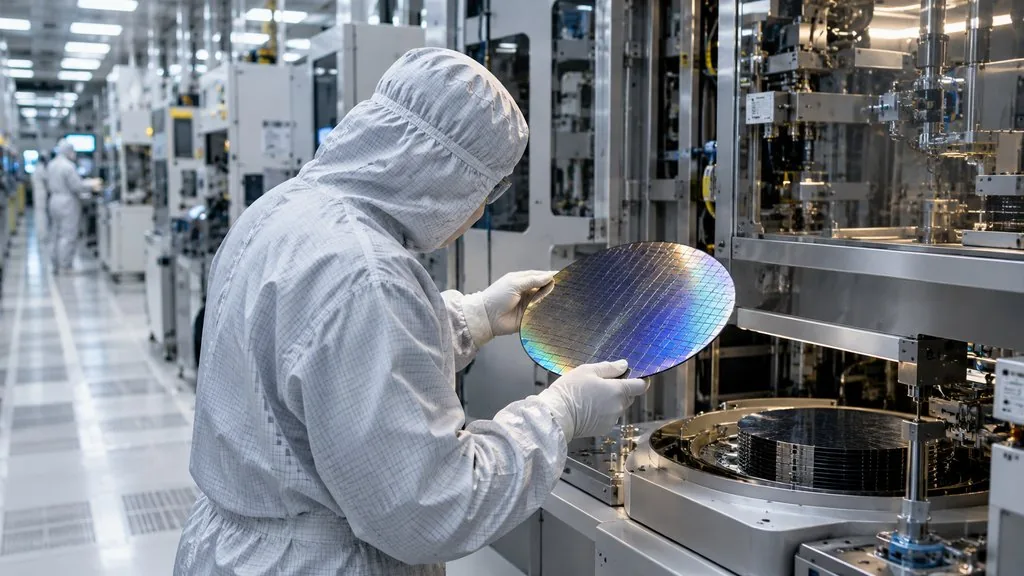
The European Commission said on Nov. 17 it had approved more than 20 state-aid decisions backing over €33 billion in semiconductor investment across the EU. The figure combines public funding and private capital for chip factories, materials, packaging and equipment. For buyers and workers, it signals political support for local supply, not yet new chips on the market.
Wafer plants, power chips and equipment funded
According to the Commission, the approved investments cover semiconductor wafers, chips, packaging, testing, assembly, specialized materials and power electronics. In July, it approved €659 million in German state aid for four facilities, listed as its 15th through 18th approvals under the relevant framework. Element 3-5 received €353 million for a silicon-carbide epitaxial wafer plant in Baesweiler for automotive, industrial, telecom and energy uses. Vishay received €214 million for silicon power MOSFET manufacturing in Itzehoe, KLA received €74.4 million for optical metrology equipment in Weilburg, and KETEK received €17.9 million for detector chips in Munich.
Austria received approval on Oct. 27 to provide €319 million for upgrading Infineon’s facility in Villach. The project expands gallium nitride power semiconductor manufacturing from 200 mm wafers toward 300 mm wafers, for electric vehicles, robotics, energy infrastructure and power systems used in AI applications. The Commission described it as a first-of-a-kind facility in the EU, as comparable 300 mm power GaN capacity is not currently available in the bloc. The European Chips Act entered into force in September 2023 after shortages disrupted automotive and electronics production, aiming to strengthen research, manufacturing and resilience. A follow-up Chips Act 2.0 proposal was introduced in June 2026 to support strategic projects and reduce dependencies.
What funding means for jobs and chip supply
For workers and businesses in Europe, the approvals point to construction, equipment installation and engineering work in industrial semiconductors, materials and metrology, rather than leading-edge AI processors. Infineon’s Villach expansion and the German wafer and power-chip plants focus on automotive systems, industrial equipment, energy and robotics supply chains. Companies buying chips should watch construction timelines, equipment installation and production qualification, as those steps determine when supply actually improves and when hiring for operations follows.
The €33 billion does not equal new subsidies or operating capacity. It represents investment linked to approved projects, and approval only allows governments to support projects under EU competition rules. An Oct. 14 commentary in the Weizenbaum Journal counted 18 investments totaling about €36 billion, including €14.8 billion in subsidies, using an earlier list and different accounting. Intel’s cancellation of its planned Magdeburg factory in 2025 showed projects can be abandoned, while the EU still depends on overseas suppliers for leading-edge logic chips.
// Read next
AI labs near cryptography breakthrough as expert panel prepares statement
A 21-expert cryptography panel lists a forthcoming statement as researchers point to an AI breakthrough in theoretical …
Musk: Google Wants to Rent More Computing Capacity From SpaceX
Elon Musk says Google is interested in renting additional computing power from SpaceX, a signal of how tight AI infrast…
RTX 5090 Cable Melt Triggers Air Quality Alarm in PC Owner Room
A Reddit user says a melting 12+4-pin cable on a Gigabyte RTX 5090 filled the room with particles and damaged the GPU p…
YouTuber builds working USB graphics card for 20 cents
Bitluni turned a 13-cent CH570 microcontroller into a monochrome USB graphics card using PWM video tricks and SRAM cach…