CoreWeave jumps 22% after Nvidia brings back Jensen Huang
Nvidia unanimously reinstated Jensen Huang less than two weeks after his exit, lifting its own shares over 30% and easing bankruptcy bets on CoreWeave.
AIXVZ
AI agents that sell for you. AIXVZ builds sales agents and automates routine business processes — from first contact to deal.
Learn more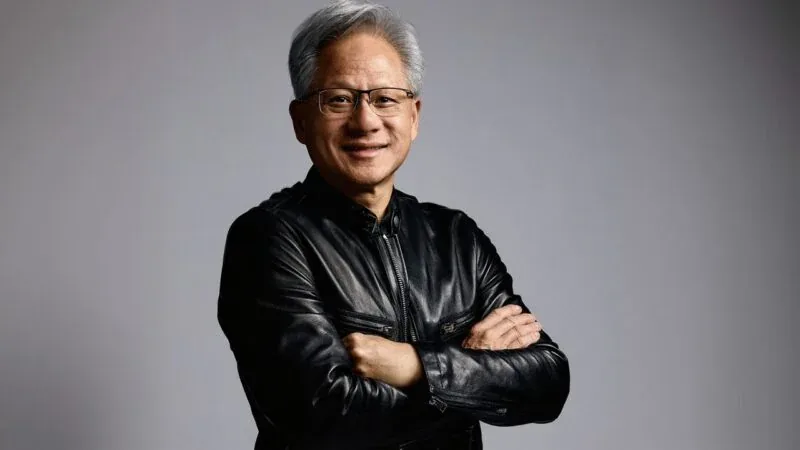
CoreWeave shares rose 22% after Nvidia reinstated Jensen Huang as chief executive, a move that quickly restored confidence in AI-linked stocks. Nvidia itself gained more than 30% on the decision, with the spillover reaching CoreWeave and other technology names. For holders of tech and crypto-adjacent equities, the episode shows how leadership risk at one supplier can move an entire group of assets.
Nvidia board reverses exit in under two weeks
Nvidia’s board voted unanimously to bring Huang back less than two weeks after his resignation, according to the report. The directors acted after discussions that satisfied them about his leadership capabilities, ending a brief period of uncertainty at the top of the chipmaker. The reinstatement was framed as a stability signal for Nvidia, whose processors underpin much of the current AI infrastructure buildout. CoreWeave, which operates large-scale GPU cloud capacity often associated with AI workloads, moved sharply alongside the announcement. The report describes the 22% advance as driven by the Nvidia decision rather than by a separate CoreWeave earnings release or transaction.
Prediction markets tracking CoreWeave’s financial stability also repriced after the news. The market pricing for a potential CoreWeave bankruptcy announcement by the end of 2027 now implies a 16% chance, down from recent higher levels, indicating lower perceived risk. That shift did not reflect a published change in CoreWeave’s balance sheet or cash position, but a reassessment by participants following Nvidia’s leadership news. The broader context is a tight linkage between AI infrastructure providers: sentiment toward Nvidia is treated as a read-across for demand, partnerships and financing conditions for GPU-heavy operators. Similar sympathy moves have occurred around Nvidia results and management news, when traders extrapolate stability at the chip supplier to customers and cloud partners.
What the rally changes for ordinary investors
For a normal holder, the practical effect is sentiment rather than fundamentals. A calmer Nvidia tends to support valuations across AI-exposed equities and related listed vehicles, including funds with technology weightings and some crypto-adjacent stocks tied to computing infrastructure. It can also ease short-term financing fears around capital-intensive operators such as CoreWeave, where traders watch refinancing and counterparty confidence. That matters for portfolio volatility, margin requirements and the pricing of options or prediction-market contracts linked to distress events. It does not change the underlying costs of running data centers, debt servicing, or customer concentration that determine long-term survival.
The story does not prove that CoreWeave’s financial risk has fallen, only that market participants currently price it lower. No new figures on revenue, debt, liquidity or contracts were provided in the source, and no statement from CoreWeave management was cited. The 16% bankruptcy pricing remains a market estimate, not a verified probability, and it applies only to an announcement by the end of 2027. Future results, partnership news or a change in Nvidia’s performance under Huang could move sentiment again in either direction.
// Read next
FT: Russian VC revealed as multibillion-dollar Tether co-owner
Vitaly Bezrodnykh, founder of Fulgur Ventures, holds a previously undisclosed multibillion-dollar stake in Tether, per …
Binance wins conditional approval for Bhutan regional hub
Binance received in-principle approval from Bhutan’s Gelephu Central Bank to build an Asia hub, weeks after a $6.3 bill…
Bitcoin and gold are 2026's worst-performing major assets
Bitcoin is down 32% in 2026 and gold 16%, placing both at the bottom of the year's major-asset rankings — a pairing mar…
Kalshi fights states over prediction market taxes and gambling rules
New York, New Jersey and Kentucky are testing whether federal oversight shields Kalshi from state gambling laws as Bern…