Chinese AI Models Risk Falling Nine Months Behind US Rivals
Export controls, rental loopholes and distillation defenses are widening the gap between Chinese labs and Western frontier models.
AIXVZ
AI agents that sell for you. AIXVZ builds sales agents and automates routine business processes — from first contact to deal.
Learn more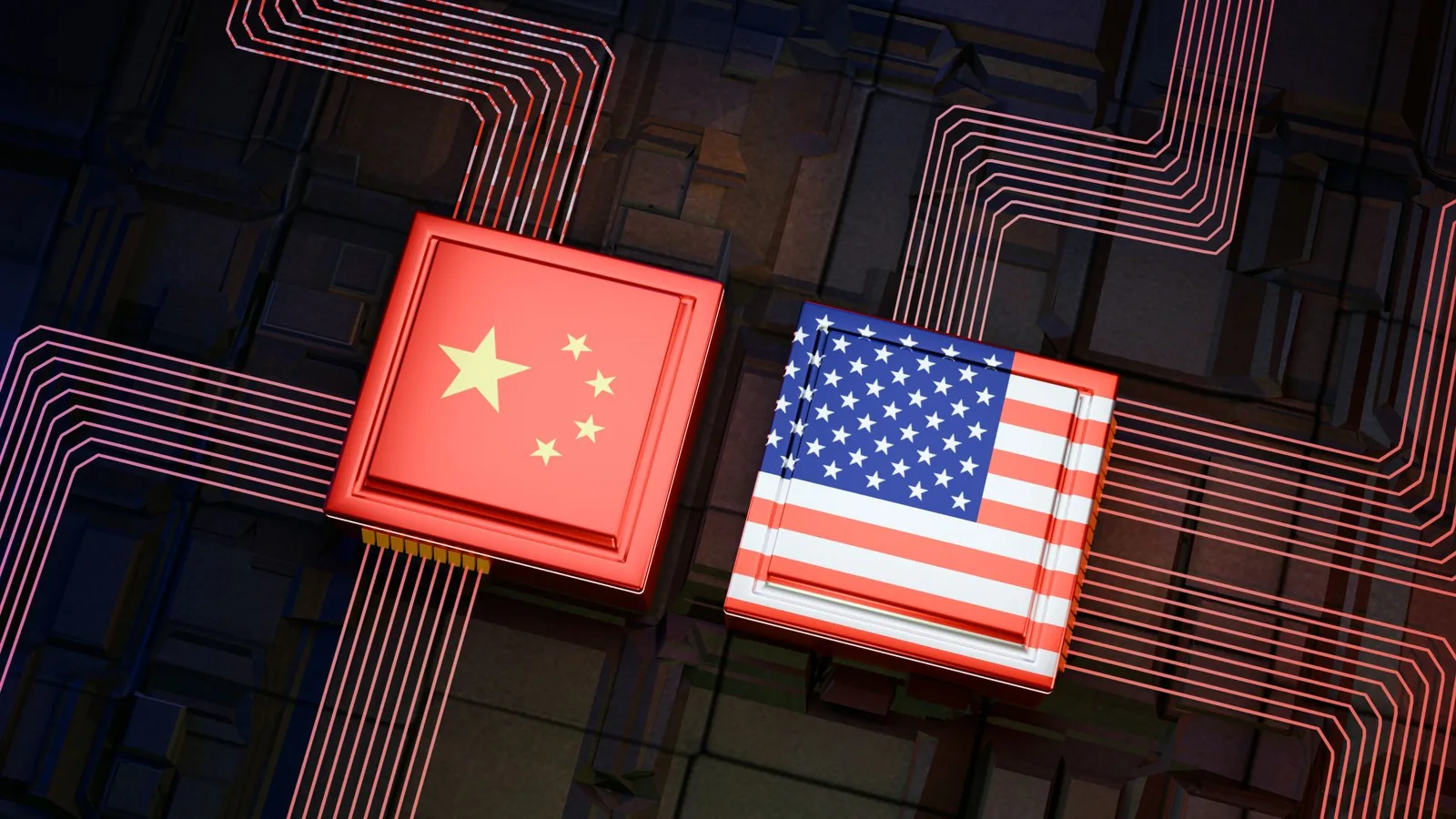
Chinese AI labs may now trail Western frontier models by up to nine months, as tighter US export controls and anti-distillation defenses slow development. Mozilla estimated a three to six month gap in September, but reports this week point to a wider divide. For users and workers, the shift affects which models lead in capability and open-weight choice.
GPU rentals, distillation limits and delayed releases
Reports this week described how closing GPU rental loopholes across Asia affected Chinese model development. Data centers in Asia had rented compute to Chinese entities, but after scrutiny involving Nvidia and Megaspeed, the US Department of Commerce tightened rules on lending compute capacity. Bloomberg reported excess compute capacity in the region as access narrowed. Zhipu AI, developer of the GLM series, allegedly delayed its release calendar because of reduced access to advanced accelerators, Reuters said.
Distillation has become a second pressure point. The technique extracts how a model reasons so another model can learn from it, and is widely seen as a factor in rapid gains by Chinese labs, a claim several leading Chinese labs dispute. Anthropic detailed stronger defenses against distillation attacks in October, including obscuring chain of thought. The Information reported DeepSeek is now dealing with that hurdle. DeepSeek is also trying to move from foreign silicon and CUDA to Huawei Ascend chips and the open-source CANN stack.
Benchmark gap widens for jobs and open models
On Artificial Analysis Intelligence Index, Anthropic Claude Fable 5.2 leads public models with 65 points, while leading Chinese model Kimi K3.1 Pro scores 47. OpenAI, Google and Meta also rank ahead of Chinese competitors that competed near the frontier months ago. An Epoch AI report put the gap between GLM 5.3 and Claude Opus 5.5 at six to seven months. For workers, weaker Chinese releases, notably in cybersecurity tasks, mean Western paid models currently offer stronger assistance for coding, research and security work.
The source cautions that rankings partly reflect method changes, including new tests such as the Omniscience score for hallucinations, alongside capability jumps by Western labs. China still leads in open-weight with Kimi K3.1 Pro, but Western options are closing in: Alibaba Qwen 3.8-27B and Thinking Machines Labs Inkling 2 Mini both score 20, though Qwen has been out for months. Hardware figures underline the silicon gap: Huawei Ascend 950DT offers 2 PFLOPS FP4 and 144GB memory at 4 TB/s, against Nvidia Rubin R200 with 50 PFLOPS inference, 288GB HBM4 and 19.2-22 TB/s bandwidth.
// Read next
AI labs near cryptography breakthrough as expert panel prepares statement
A 21-expert cryptography panel lists a forthcoming statement as researchers point to an AI breakthrough in theoretical …
Musk: Google Wants to Rent More Computing Capacity From SpaceX
Elon Musk says Google is interested in renting additional computing power from SpaceX, a signal of how tight AI infrast…
RTX 5090 Cable Melt Triggers Air Quality Alarm in PC Owner Room
A Reddit user says a melting 12+4-pin cable on a Gigabyte RTX 5090 filled the room with particles and damaged the GPU p…
YouTuber builds working USB graphics card for 20 cents
Bitluni turned a 13-cent CH570 microcontroller into a monochrome USB graphics card using PWM video tricks and SRAM cach…