Base USDC leads on-chain transfers but lags in merchant payments
Glassnode found USDT on Tron, BNB Chain and Ethereum made up 86% of NOWPayments stablecoin volume, while Base USDC dominates on-chain transfers.
AIXVZ
AI agents that sell for you. AIXVZ builds sales agents and automates routine business processes — from first contact to deal.
Learn more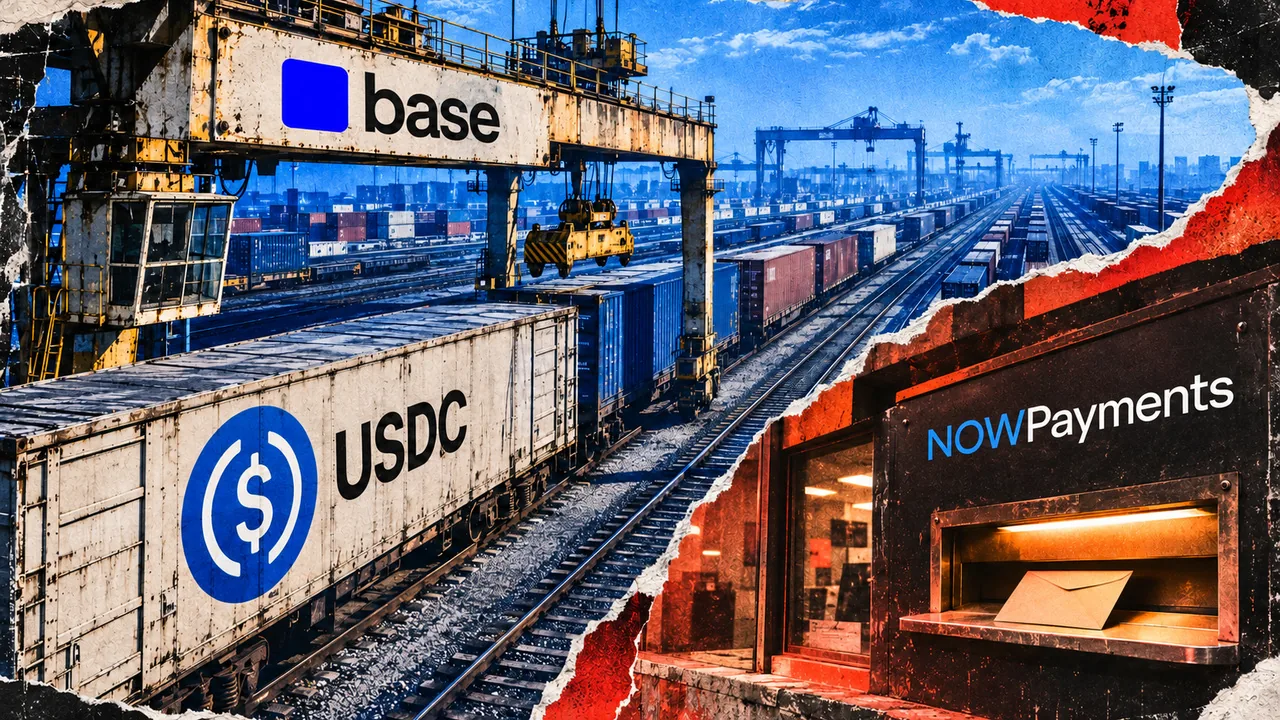
USDC on Base ranks among the largest stablecoin routes by on-chain transfer value but trails USDT networks in merchant payments processed by NOWPayments, according to a Glassnode report published Nov. 10. USDT on Tron, BNB Chain and Ethereum together supplied 86% of the processor stablecoin pay-in value from September 2025 to September 2026. The gap matters because high transfer volume does not automatically mean shoppers are paying with that network.
USDT routes dominate processor volume
Glassnode compared two different distributions over September 2025 to September 2026. One side measured USDT and USDC transfer value across blockchain routes. The other measured stablecoin pay-in value observed by NOWPayments across trading, e-commerce, software-as-a-service and iGaming merchants. The leading on-chain trio of USDC on Base, USDC on Ethereum and USDT on Tron accounted for 54% of on-chain value in the comparison. USDT on Tron and BNB Chain alone brought in about 75% of NOWPayments stablecoin pay-in value, while those same routes carried 14% of on-chain USDT and USDC value.
Merchant configuration and promotions add further context to the processor mix. NOWPayments merchant setup instructions tell businesses to choose the customer currencies they accept in Coin settings, making merchant configuration a possible influence alongside customer demand. The payment firm also announced an offer on Oct. 30, 2025, giving new users two months without network fees on USDT-on-Tron deposits, with its current offer page advertising 60 days without network fees for new partners that activate custody. Glassnode says the timing makes the promotion relevant to interpreting the mix, although it does not establish that the offer produced Tron share. An Aug. 11 analysis by Talos and Coin Metrics attributed 69% of Base USDC raw transfer volume to decentralized-exchange liquidity provision and 23% to flash loans, with those tagged categories described as lower-bound estimates.
What the payment gap means in practice
For businesses and customers, the practical test is whether the routes a merchant offers match incoming payments at an acceptable full cost, including fees, conversion and custody. A network can look dominant in raw transfers because of liquidity provision, bridging, treasury movements and other settlement, while merchants receive most funds through different networks. Pay-in value measures money received, but it cannot establish how many retail purchases occurred. The public summary also leaves merchant counts, geography, payment-value concentration and conversion treatment unspecified, so one processor cannot stand in for ordinary retail spending.
The findings do not prove a global merchant market share for Base or show lost sales on any network. The Talos and Coin Metrics work uses a different window and denominator than the Glassnode merchant comparison and cannot explain why NOWPayments received its particular mix. The contribution of merchant settings and the conditional Tron fee offer to the payment mix remains unmeasured. Broader and comparable merchant coverage would be needed to turn one processor experience into a wider assessment of Base.
// Read next
FT: Russian VC revealed as multibillion-dollar Tether co-owner
Vitaly Bezrodnykh, founder of Fulgur Ventures, holds a previously undisclosed multibillion-dollar stake in Tether, per …
Binance wins conditional approval for Bhutan regional hub
Binance received in-principle approval from Bhutan’s Gelephu Central Bank to build an Asia hub, weeks after a $6.3 bill…
Bitcoin and gold are 2026's worst-performing major assets
Bitcoin is down 32% in 2026 and gold 16%, placing both at the bottom of the year's major-asset rankings — a pairing mar…
Kalshi fights states over prediction market taxes and gambling rules
New York, New Jersey and Kentucky are testing whether federal oversight shields Kalshi from state gambling laws as Bern…