Amazon says AI agents wrote its AWS Emulator with no human code review
Amazon released AWS Emulator on Nov. 11, saying agents wrote the code while humans built guardrails, with fidelity tests and security limits defining safe use.
AIXVZ
AI agents that sell for you. AIXVZ builds sales agents and automates routine business processes — from first contact to deal.
Learn more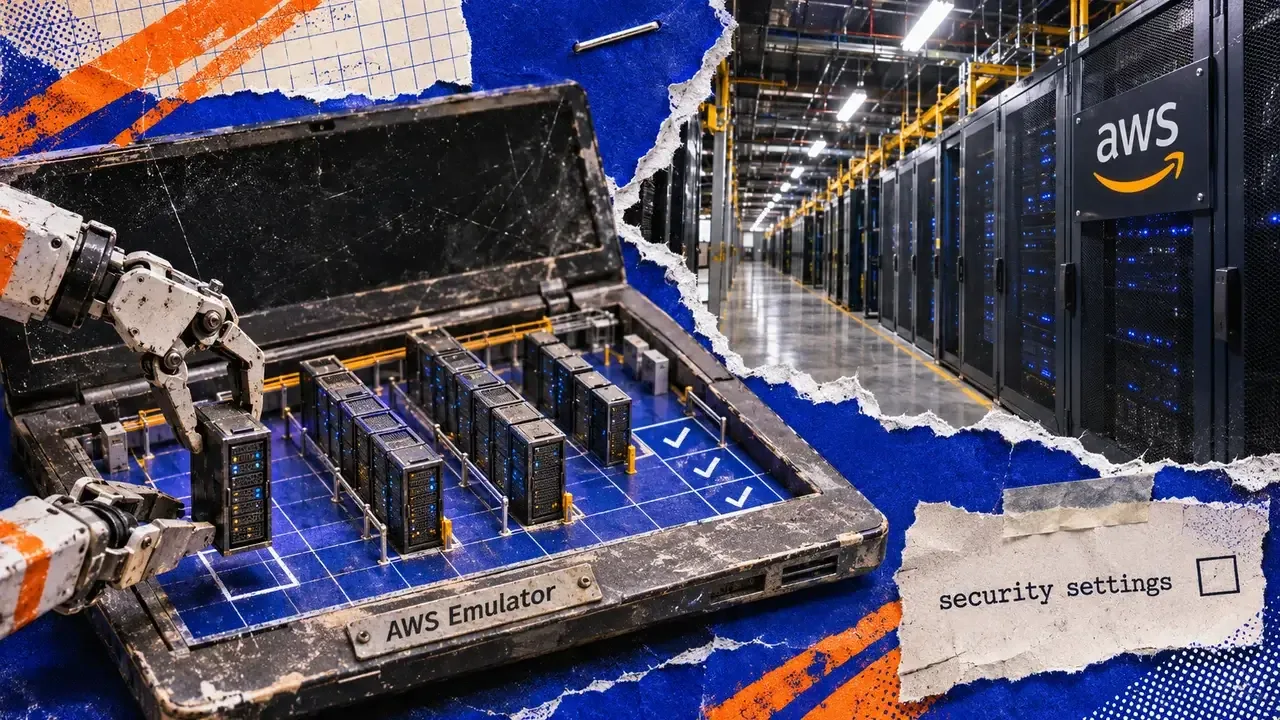
Amazon released AWS Emulator on November 11, a local tool that imitates AWS services for testing cloud applications, and said autonomous AI agents wrote and reviewed its implementation. Engineer Matthew Goldberg said his team neither wrote nor reviewed the emulator code. The release matters because it separates agent authorship from human-built guardrails, fidelity checks and a requirement to test security on real AWS before production.
Three agent teams and human guardrails
Amazon describes three teams of agents behind the emulator: one manages fidelity tests, another finds differences between the emulator and real AWS, and a third fixes individual issues. Changes face checks for compilation, coding standards, security and regressions before merging, according to the company. Goldberg described the engineering work needed to turn an experiment into a product, including the guardrails and checks that determine which changes can ship. The test agents work from public AWS API models and verify their scenarios against the real cloud.
The public evaluation suite says every fidelity test was checked against at least two sandboxed AWS accounts. AWS calls the degree of agreement with its cloud services fidelity. A test passes when the emulator matches AWS for every call in that workflow, including status codes, resulting resources, side effects and errors, according to its fidelity documentation. Returning success where AWS returns an error fails that test. The boundary is coverage: the evaluation repository explicitly says behavior without a fidelity test is unverified, so passing one scenario does not establish that every way an application uses AWS will work.
What agent-written code means for builders
For developers and teams handling money, customer data or blockchain infrastructure, the practical point is acceptance testing rather than authorship. The emulator is for building and testing, not production workloads, and AWS instructs developers to test the whole application on real AWS before production. That workflow applies to wallet backends, exchange services, custody integrations and tokenisation platforms that rely on cloud permissions and side effects matching production. A local pass cannot be treated as proof that deployment, error handling or access controls will behave the same way live.
Security has a separate limit that the story does not resolve. AWS security guidance warns against using the emulator to determine whether an application is secure, noting it does not check AWS KMS key policies or Amazon S3 bucket policies. A request denied by AWS may succeed locally. Agent review of implementation security therefore cannot be read as validation of a user application permissions. The release establishes only what was tested against real AWS, not uncovered behavior or production safety.
// Read next
FT: Russian VC revealed as multibillion-dollar Tether co-owner
Vitaly Bezrodnykh, founder of Fulgur Ventures, holds a previously undisclosed multibillion-dollar stake in Tether, per …
Binance wins conditional approval for Bhutan regional hub
Binance received in-principle approval from Bhutan’s Gelephu Central Bank to build an Asia hub, weeks after a $6.3 bill…
Bitcoin and gold are 2026's worst-performing major assets
Bitcoin is down 32% in 2026 and gold 16%, placing both at the bottom of the year's major-asset rankings — a pairing mar…
Kalshi fights states over prediction market taxes and gambling rules
New York, New Jersey and Kentucky are testing whether federal oversight shields Kalshi from state gambling laws as Bern…