Abu Dhabi court freezes Binance hack tokens at 18 firms
An Abu Dhabi court ordered Circle and 17 others to keep assets linked to the $6.3 billion Binance theft frozen ahead of a Dec. 1 hearing.
AIXVZ
AI agents that sell for you. AIXVZ builds sales agents and automates routine business processes — from first contact to deal.
Learn more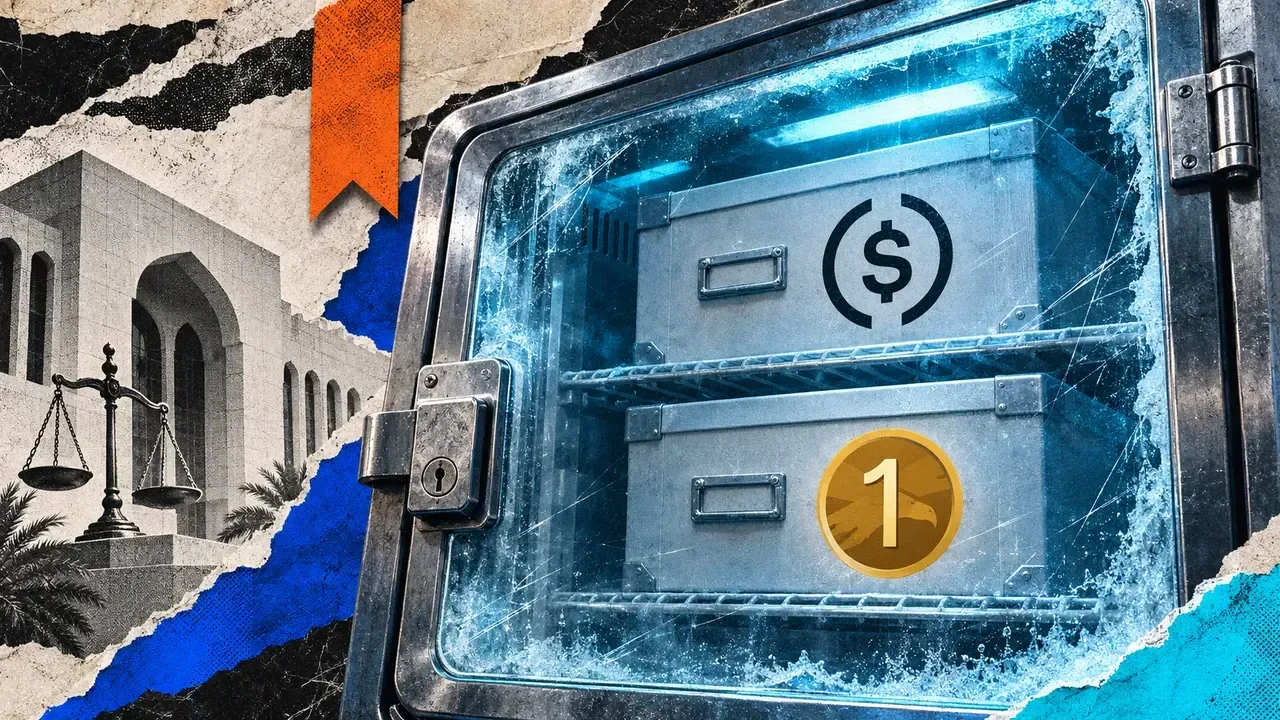
An Abu Dhabi court ordered 18 crypto firms to keep tokens linked to Binance’s Oct. 29 theft frozen while recovery efforts continue. Binance disclosed the order on Nov. 18, saying it creates a legal path for issuers and exchanges to release or transfer frozen balances. The move matters because stablecoin issuers often require a court order before returning disputed funds.
Circle, USD1 issuer named in freeze order
Binance said the order from the Abu Dhabi Global Market Courts covers firms including Circle, issuer of USDC, and World Liberty Financial, the company behind USD1. The firms must maintain existing freezes pending further proceedings and cannot lend, swap or mix the affected tokens with other assets. The court did not accuse any of the named firms of wrongdoing. Binance said some issuers, exchanges and partners ask for a court order before they will release or transfer assets they have frozen, and described the order as helping open that route.
Binance said it is still tracing the stolen crypto and taking legal steps to reclaim it, giving no details of any transfer under the order. In its Nov. 3 incident report, the exchange estimated that about $6.3 billion in digital assets were affected and about $2.85 billion was frozen or intercepted, subject to reconciliation and market prices. The Abu Dhabi order follows earlier US action. On Nov. 12, the US Justice Department said it had obtained court authority to seize or restrain more than $1.2 billion in stolen crypto, part of more than $2.7 billion that US authorities and private firms had helped freeze. The disclosures do not establish how much the figures overlap.
What recovery means for customer balances
For holders, the case shows how recovery of stolen stablecoins depends on issuers, courts and cross-border coordination rather than blockchain reversal alone. Tether falls outside the 18-firm order and said on Nov. 2 it had frozen more than $1.5 billion tied to the theft. A spokesperson said Tether would work directly with Binance to reissue the tokens, in consultation with the relevant authorities. Whether frozen balances can be returned depends on whether each firm has authority to release the specific balances it holds. Binance says it absorbed the financial impact on customers while continuing to pursue the stolen assets.
The order does not prove how much will be recovered or when. A Dec. 1 hearing will consider whether the freeze should continue and on what terms. The injunction covers only specific assets Binance claimed are tied to the theft. It does not affect customers unrelated to those balances, and it does not establish liability for Circle, World Liberty Financial or the other named firms.
// Read next
FT: Russian VC revealed as multibillion-dollar Tether co-owner
Vitaly Bezrodnykh, founder of Fulgur Ventures, holds a previously undisclosed multibillion-dollar stake in Tether, per …
Binance wins conditional approval for Bhutan regional hub
Binance received in-principle approval from Bhutan’s Gelephu Central Bank to build an Asia hub, weeks after a $6.3 bill…
Bitcoin and gold are 2026's worst-performing major assets
Bitcoin is down 32% in 2026 and gold 16%, placing both at the bottom of the year's major-asset rankings — a pairing mar…
Kalshi fights states over prediction market taxes and gambling rules
New York, New Jersey and Kentucky are testing whether federal oversight shields Kalshi from state gambling laws as Bern…