United Fidelity Bank shut down in biggest US failure in two years
Regulators closed Indiana-based United Fidelity Bank with $6 billion in assets, the largest US bank failure since April 2024, as gold loans and crypto also show strain.
AIXVZ
AI agents that sell for you. AIXVZ builds sales agents and automates routine business processes — from first contact to deal.
Learn more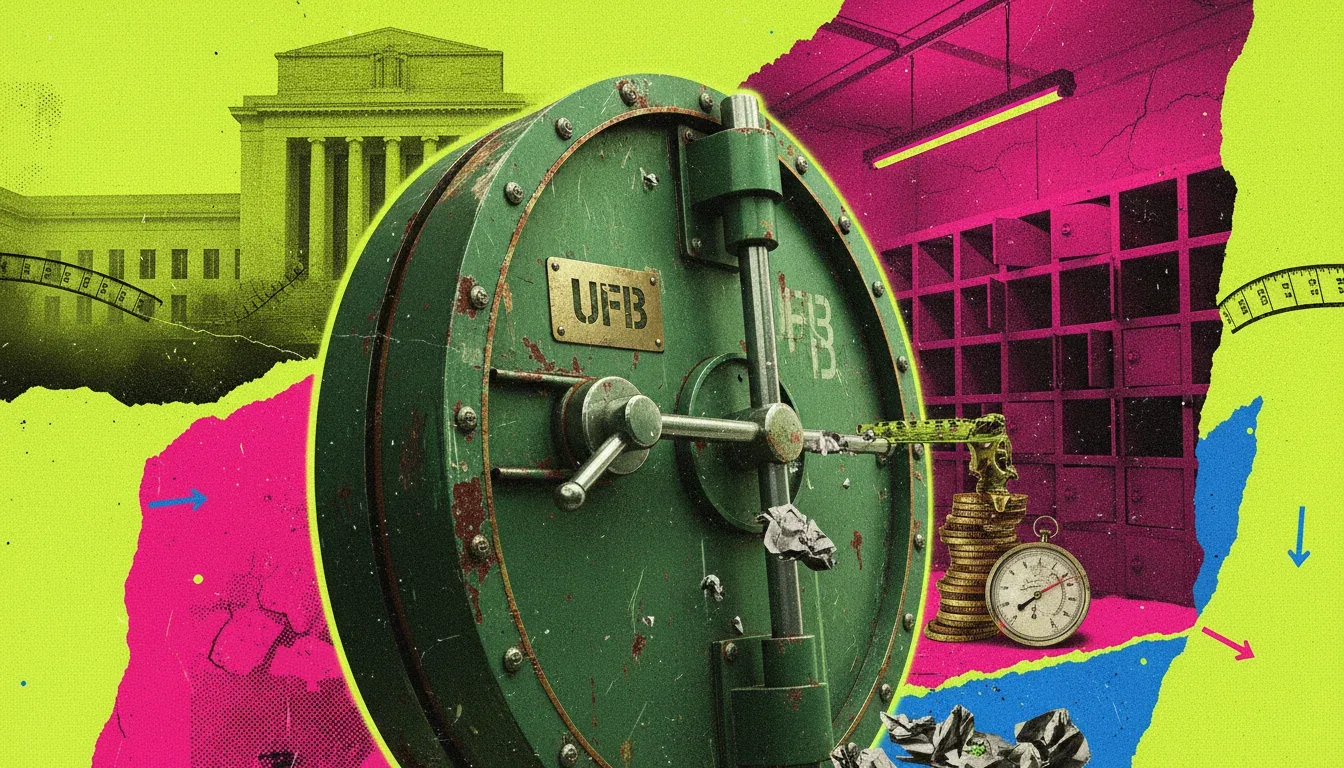
Federal regulators closed Indiana-based United Fidelity Bank on Friday after concluding the lender was likely unable to pay its obligations, the largest US bank failure in two years. The $6 billion institution is the biggest to go down since April 2024, with First Citizens assuming all deposits and assets.
The closure comes as supervisors sharpen their focus on collateral-backed lending. India's banking regulator is stepping up scrutiny of the country's $247 billion gold-loan sector, according to people familiar with the matter, after a sharp drop in bullion prices eroded the collateral lenders demand from borrowers.
Other markets are showing tension as well. Bitcoin slid below $59,000 even as stocks and gold rallied — an unusual divergence. Analysts point to four consecutive weeks of above-average selling volume and warn the asset may be nearing seller capitulation.
Leverage is amplifying the move: more than $407 million in crypto positions were liquidated in 24 hours, $314 million of them longs. One large holder is running a $149.9 million Bitcoin long with 40x leverage and a liquidation price of $59,672.
Elsewhere in the sector, Binance said it fully lifted the withdrawal suspension imposed after a record $6.3 billion hack, with recovery work complete across nearly all networks. Co-CEO He Yi said the incident may have been linked to overly broad permissions granted during the company's AI rollout.
What it means: the failure puts a spotlight on smaller lenders whose books lean on a single class of collateral, and on how quickly falling asset prices become a solvency question. Expect tighter supervision of concentration risk — and a crypto market where leverage, rather than macro headlines, sets the pace of the next move.
// Read next
Growth Stocks Turn Cheaper Than Value for First Time Since 2008
The S&P 500 Growth index fell 15% from the October peak and its forward P/E dropped below value, a split last seen in t…
Tech sell-off drags down three consumer stocks with raised outlooks
With the S&P 500 down nearly 12% from its peak, Amer Sports, Tapestry and Birkenstock trade at 13 to 22 times forward e…
Monster and AutoZone Offer Shelter as Nasdaq Swings on Nvidia
With the Nasdaq whipsawed by Nvidia leadership turmoil, Monster Beverage and AutoZone stand out for low volatility and …
Canada bank earnings preview puts 2027 outlooks in focus
Canada's Big Six banks report fourth-quarter results this week, with analysts watching capital markets softness, margin…