Trump Tariffs Remain Despite Voter Backlash and Democrat Wins
Democrats won big by attacking tariffs that cost households about $900 a year, but veto power, party splits and $370 billion in revenue make repeal difficult.
AIXVZ
AI agents that sell for you. AIXVZ builds sales agents and automates routine business processes — from first contact to deal.
Learn more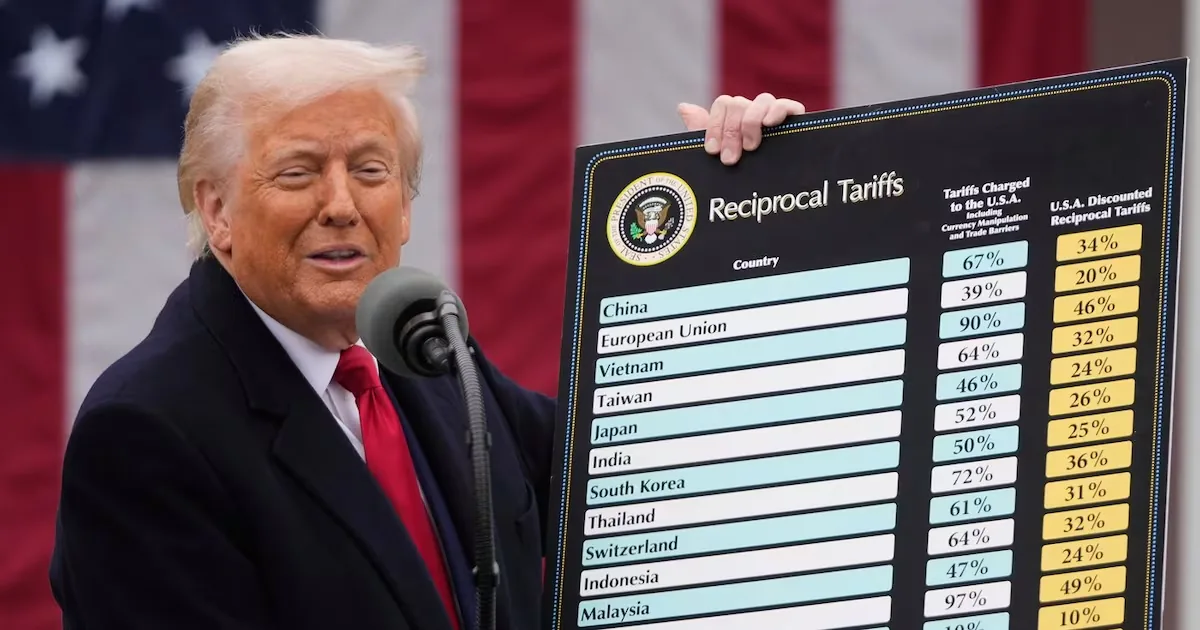
Democrats turned anger over import taxes into sweeping gains in the Nov. 3 midterm elections, including the first Democratic Senate win in Texas since 1988. About two-thirds of voters said President Donald Trump’s tariffs hurt the economy, while Yale University’s Budget Lab estimates they cost the average household about $900 a year. Repealing them will still require overcoming a presidential veto and deep divisions over trade.
How tariffs rose and why repeal needs GOP votes
Democrats campaigned on tariffs as a cost-of-living issue, with Texas Senate candidate James Talarico blaming a tariff on Mexican tomatoes for raising the price of chips and salsa. The AP Voter Poll of more than 100,000 midterm voters found only about 2 in 10 said tariffs helped the national or local economy, and voters who saw harm overwhelmingly backed Democrats in House races. The White House said President Trump will never waver from putting Americans and America First through trade, tax cuts and deregulation.
Trump built the tariff wall using authority Congress delegated over many years, though the Constitution gives tax power to Congress. After a first-term trade war with China and steel and aluminum duties based on national security, he expanded tariffs in his second term, lifting the average U. S. rate from around 2.5 percent in January 2025 to 11.2 percent now, according to Yale’s Budget Lab. The Supreme Court rejected his most ambitious tariffs in February, including a 50 percent duty on Brazil imposed after prosecution of former president Jair Bolsonaro, but other duties remain through separate legal authorities.
What tariff revenue and veto math mean for budgets
For households, the consequence is higher prices because U. S. importers pay tariffs and often pass costs to consumers, adding pressure alongside elevated inflation and higher gasoline prices linked to conflict with Iran. For businesses tied to cross-border supply chains, the impact is direct: Gallert Global Group, a New Jersey food importer, said it pays millions in added costs on Canadian cheese that it cannot sustainably absorb. Democrats propose repealing July tariffs on 60 trading partners over forced labor and requiring congressional approval for new duties, with Oregon Sen. Ron Wyden targeting 50 percent tariffs imposed in August on $20 billion of Canadian imports that drew retaliation from Ottawa.
Repeal is not assured because overriding a veto needs two-thirds in both chambers, which Democrats lack even if they win undecided races, so Republican defections would be required. Democrats are also split between restoring lower tariffs and keeping duties against China and other unfair practices, while tariffs generated nearly $370 billion over two budget years against $40 trillion in federal debt. The Canada duties illustrate the political opening and the limit: they are described as wildly unpopular and contributed to Sen. Susan Collins’ loss in Maine despite exemptions, but former officials remain skeptical Republicans will break with Trump.
// Read next
Growth Stocks Turn Cheaper Than Value for First Time Since 2008
The S&P 500 Growth index fell 15% from the October peak and its forward P/E dropped below value, a split last seen in t…
Tech sell-off drags down three consumer stocks with raised outlooks
With the S&P 500 down nearly 12% from its peak, Amer Sports, Tapestry and Birkenstock trade at 13 to 22 times forward e…
Monster and AutoZone Offer Shelter as Nasdaq Swings on Nvidia
With the Nasdaq whipsawed by Nvidia leadership turmoil, Monster Beverage and AutoZone stand out for low volatility and …
Canada bank earnings preview puts 2027 outlooks in focus
Canada's Big Six banks report fourth-quarter results this week, with analysts watching capital markets softness, margin…