Japan Weighs Treasury Sales as BOJ Tightening Cycle Bites
Ueda warns inflation can no longer be tolerated; with the yen near 160 and 10-year yields at a 30-year high, Tokyo faces a managed exit from free money, not a collapse.
AIXVZ
AI agents that sell for you. AIXVZ builds sales agents and automates routine business processes — from first contact to deal.
Learn more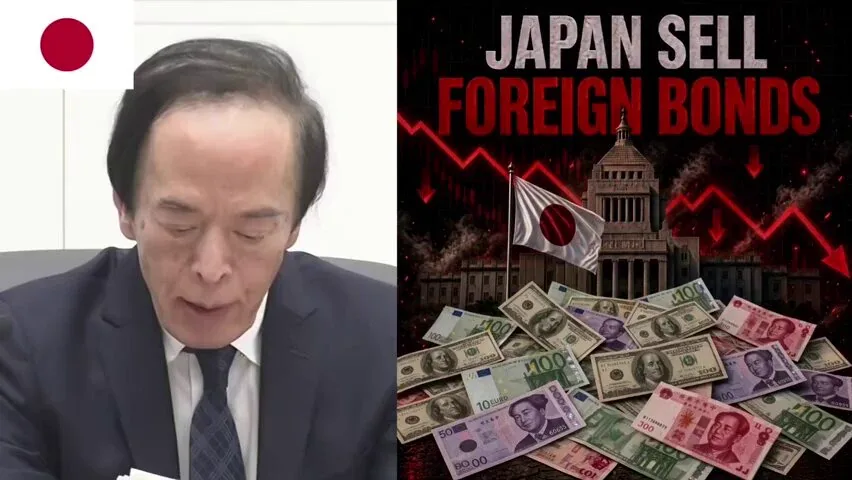
Tokyo is sounding a public alarm: Bank of Japan Governor Kazuo Ueda warned that rising inflation can no longer be tolerated and that further rate hikes are unavoidable, while Finance Minister Satsuki Katayama said policymakers would act without hesitation, including on foreign-exchange measures. The warnings — and the video framing Japan as "selling foreign bonds" — have revived a market question that has been growing for months: what happens if the world's biggest holder of U. S. Treasuries starts selling?
A coordinated yen rescue that already happened
Japan and the United States already staged a joint yen-buying intervention in late July and August, after the currency slid to about 163-164 per dollar — its weakest level in roughly four decades. Treasury Secretary Scott Bessent confirmed coordinated action to counter "disorderly yen movements," and both countries signalled they would intervene again if needed. The episode cost Tokyo about $98.6 billion in reserves in a single month, much of it raised by selling foreign securities, including Treasuries. That is why Bessent has pushed the Federal Reserve to expand the FIMA repo facility: it lets Japan borrow dollars against Treasury collateral instead of being forced to sell bonds into the market.
The rates squeeze behind the headlines
The deeper driver is domestic. The BOJ has lifted its policy rate from negative territory to 1% this year, with inflation running well above the 2% target and producer prices accelerating to 7.1% year-on-year in October. The 10-year Japanese government bond yield has climbed to about 2.8%, a 30-year high, while the yen has slipped back toward 160 per dollar. For households and borrowers, tighter policy means higher mortgage and loan rates — and for the state, every additional percentage point of interest adds tens of trillions of yen to annual debt service. Investor alarm about a "carry-trade unwind" and a global liquidity shock is understandable, but the official scenario is more controlled than the viral framing suggests: a FIMA backstop, coordinated intervention rules, and a central bank that is raising rates on a declared schedule are tools for managing the exit from free money, not symptoms of its collapse.
// Read next
Growth Stocks Turn Cheaper Than Value for First Time Since 2008
The S&P 500 Growth index fell 15% from the October peak and its forward P/E dropped below value, a split last seen in t…
Tech sell-off drags down three consumer stocks with raised outlooks
With the S&P 500 down nearly 12% from its peak, Amer Sports, Tapestry and Birkenstock trade at 13 to 22 times forward e…
Monster and AutoZone Offer Shelter as Nasdaq Swings on Nvidia
With the Nasdaq whipsawed by Nvidia leadership turmoil, Monster Beverage and AutoZone stand out for low volatility and …
Canada bank earnings preview puts 2027 outlooks in focus
Canada's Big Six banks report fourth-quarter results this week, with analysts watching capital markets softness, margin…