Jackbox and Bluey show how family games actually work
Game Informer gathered holiday picks for family play and asked Jackbox Games and Halfbrick how they design party games that children and parents can finish together.
AIXVZ
AI agents that sell for you. AIXVZ builds sales agents and automates routine business processes — from first contact to deal.
Learn more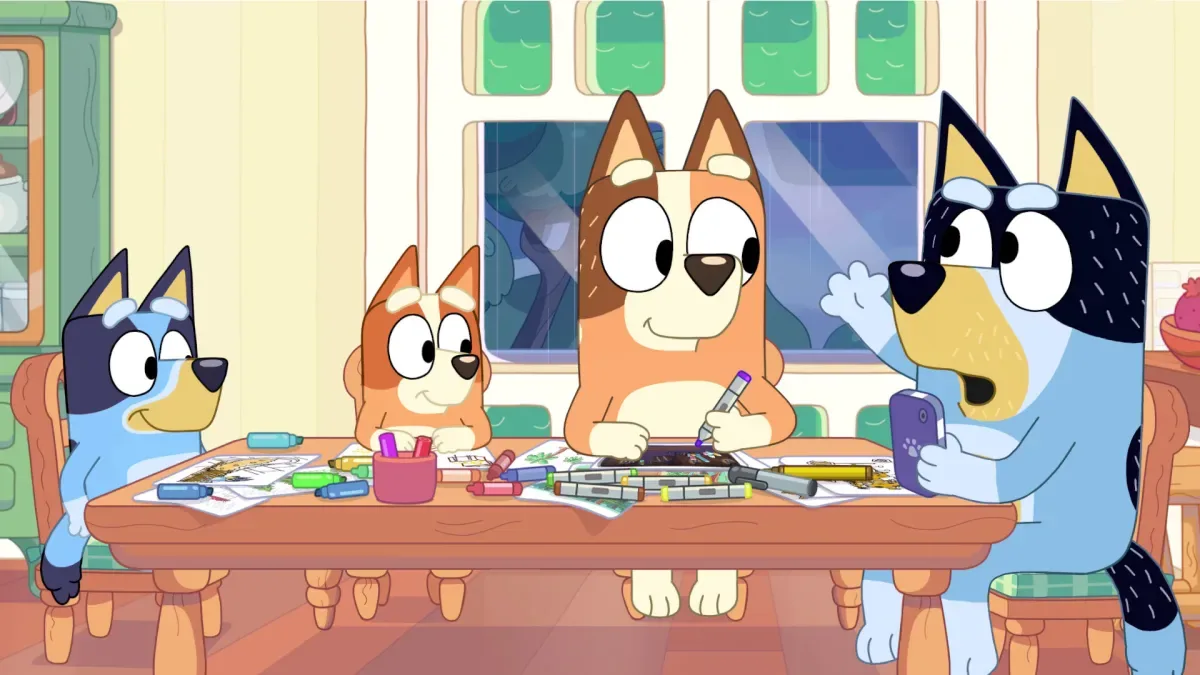
Game Informer assembled holiday recommendations for playing with children and family, speaking with Jackbox Games and Halfbrick, maker of Bluey’s Quest for the Gold Pen, about designing games that different ages can enjoy together. The centerpiece is Jackbox Games, now at its 12th Party Pack, and Halfbrick’s approach to letting younger players finish a game without getting blocked. The takeaway for players is practical: shared controls and adjustable difficulty matter more than graphics for a holiday session.
Party packs, Bluey and playtests with kids
Jackbox Games studio creative director Arnie Niekamp said inclusivity guides design, with the goal of making games playable by as many people as possible. Game product manager Brooke Breit, lead on The Jackbox Party Pack 12, said the team playtests constantly during production, including sessions with their own families and children, whose opinions shape what makes a strong Jackbox game. The studio’s structure helps: long-tenured creators who started as young single staff now have families and test from a parent perspective. Phones are central to the formula, used as controllers rather than distractions, with attention split between device and main screen to keep people talking.
Halfbrick writer Brendan Deboy said shared enjoyment was central to Bluey’s Quest for the Gold Pen, noting that Bluey’s humor, relationships and themes give children and parents reasons to enjoy stories together. Children of Halfbrick parents aged four to 10 playtested the game, with parents reporting what children liked and where they became stuck. To avoid blocks, challenges were made satisfying but optional, with harder tasks placed in harder-to-find areas so easier activities appear first. Players can leave a difficult activity, try another and return later, with choices across timing, motor skills, exploration, searching and logical thinking. Deboy said memories of childhood games stopped by one difficult boss informed that approach.
What to pick for holiday play sessions
For households planning time together, the selection logic is to match input complexity and tone to the youngest player while keeping adults engaged. Jackbox titles work where each person has a phone and the room can talk, laugh and vote, shifting focus between screens. Bluey’s Happy Snaps offers stress-free solo or two-player exploration as Bluey photographs animals and friends in areas such as the Park and Riverbank to build a scrapbook with stickers and decorations. The Mermaid Mask suits older children comfortable with cartoon bloodstains and themes of mortality, built around testimony, evidence and puzzles after a murder aboard a submarine. Minecraft Dungeons II offers four-player local multiplayer and accessible combat in a familiar world.
Super Mario Bros. Wonder, released on Switch in 2023 and ported to Switch 2 with added features in 2026, bridges older and newer Mario players, according to the roundup. Niekamp praised Mario Party as brilliant while wishing it moved faster, and said there are not enough fun cooperative family games, especially for younger children where good options run out quickly. The broader point from both studios is that completion matters: families return to games that let everyone reach the end, rather than replaying only opening levels. Choosing titles with local multiplayer, sandbox exploration or group puzzle solving reduces downtime and keeps mixed skill levels involved.
// Read next
FBC: Firebreak Is Free With $1 Charity Bundle on Green Man Gaming
Green Man Gaming adds Remedy's co-op shooter FBC: Firebreak to three charity bundles, with the cheapest entry tier pric…
Xbox Elite Series 3 Leak Shows Batteries, RGB and New Controls
A new Reddit video shows the unannounced Xbox Elite Series 3 with swappable batteries, RGB lighting and dual volume whe…
Leaked GTA 6 settings put PS5 and Xbox Series X on equal footing
A data miner leak suggests standard PS5 and Xbox Series X share identical GTA 6 graphics settings, while PS5 Pro leads …
Nintendo Switch 2 Cyber Monday deals hold from $499 bundles
Amazon, Best Buy and GameStop carry Black Friday pricing into Cyber Monday, with Switch 2 bundles from $499 and record-…