Fed Rate Forecast Points to More Hikes Threatening AI Stock Rally
Federal Reserve Chair Kevin Warsh and the Federal Open Market Committee appear set to resume interest rate increases, with futures markets pricing a 100% chance of a hike at the Dec. 9 meeting. The CME Group FedWatch Tool now shows a 64% chance of at least 50 basis points of tightening by Jan. 27,…
AIXVZ
AI agents that sell for you. AIXVZ builds sales agents and automates routine business processes — from first contact to deal.
Learn more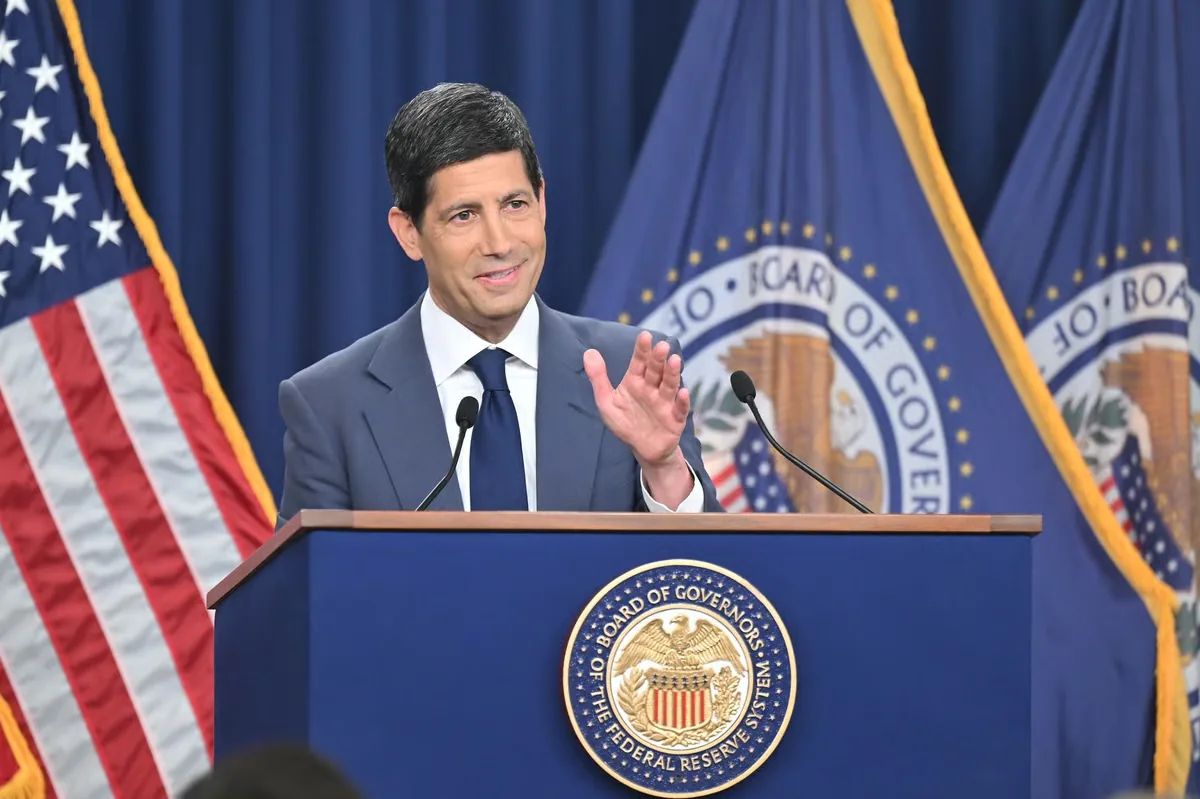
Federal Reserve Chair Kevin Warsh and the Federal Open Market Committee appear set to resume interest rate increases, with futures markets pricing a 100% chance of a hike at the Dec. 9 meeting. The CME Group FedWatch Tool now shows a 64% chance of at least 50 basis points of tightening by Jan. 27, 2027. For households and investors, it signals higher borrowing costs ahead after a four-year bull market driven by artificial intelligence infrastructure spending.
FedWatch prices hikes through mid-2027
The forecast comes from CME FedWatch, which uses 30-day Fed Funds futures prices to track the probability of changes to the federal funds rate at upcoming FOMC meetings. The tool has a strong record of anticipating Fed actions, though it cannot guarantee what Warsh and policymakers will do next. Its odds of a December hike have been pinned at 100% for about two weeks, according to the source. What changed is the outlook beyond December, pointing to a more extended inflation-fighting cycle. The figures imply 25-basis-point increases at both the December and January meetings.
The same futures pricing puts the odds just above 58% that the federal funds rate will reach at least 4.50%-4.75% by the June 9, 2027 meeting. That would amount to at least 75 basis points of increases over the next five FOMC meetings, lifting the target range from current levels. Fed officials have tied that stance to returning annualized inflation, as measured by the Personal Consumption Expenditures Price Index, to the 2% long-term target. While some AI companies have funded data center expansion with cash on hand and operating cash flow, many have turned to debt offerings to raise capital for the build-out.
Why costly debt risks pricey equities
Higher rates make that debt-financed expansion progressively costlier, which matters because the Dow Jones Industrial Average, S&P 500 and Nasdaq Composite have reached repeated record highs on AI infrastructure investment. If the build-out slows even slightly due to borrowing costs, equity gains tied to that spending could stall. The risk is amplified by valuation: the S&P 500 entered the year at its second-highest valuation in history on the Shiller Price-to-Earnings Ratio, also known as the Cyclically Adjusted P/E Ratio. Premium valuations leave little room for disappointment in earnings or capital spending plans.
The story does not prove a market decline is imminent, and Fed policy is only one of several pressures cited, including historically high valuations and elevated margin debt. Futures probabilities shift daily with economic data and can reverse if inflation cools faster than expected. The rate path described applies to benchmark policy rates and corporate borrowing conditions, not directly to household savings or mortgage decisions. Nothing in the forecast guarantees action at any specific meeting beyond what futures currently imply.
// Read next
Growth Stocks Turn Cheaper Than Value for First Time Since 2008
The S&P 500 Growth index fell 15% from the October peak and its forward P/E dropped below value, a split last seen in t…
Tech sell-off drags down three consumer stocks with raised outlooks
With the S&P 500 down nearly 12% from its peak, Amer Sports, Tapestry and Birkenstock trade at 13 to 22 times forward e…
Monster and AutoZone Offer Shelter as Nasdaq Swings on Nvidia
With the Nasdaq whipsawed by Nvidia leadership turmoil, Monster Beverage and AutoZone stand out for low volatility and …
Canada bank earnings preview puts 2027 outlooks in focus
Canada's Big Six banks report fourth-quarter results this week, with analysts watching capital markets softness, margin…