Canadian textile maker plans US move after tariffs hit sales
Fine Cotton Factory saw US orders fall under tariffs up to 50 percent and now plans a warehouse and production in America despite any future trade deal.
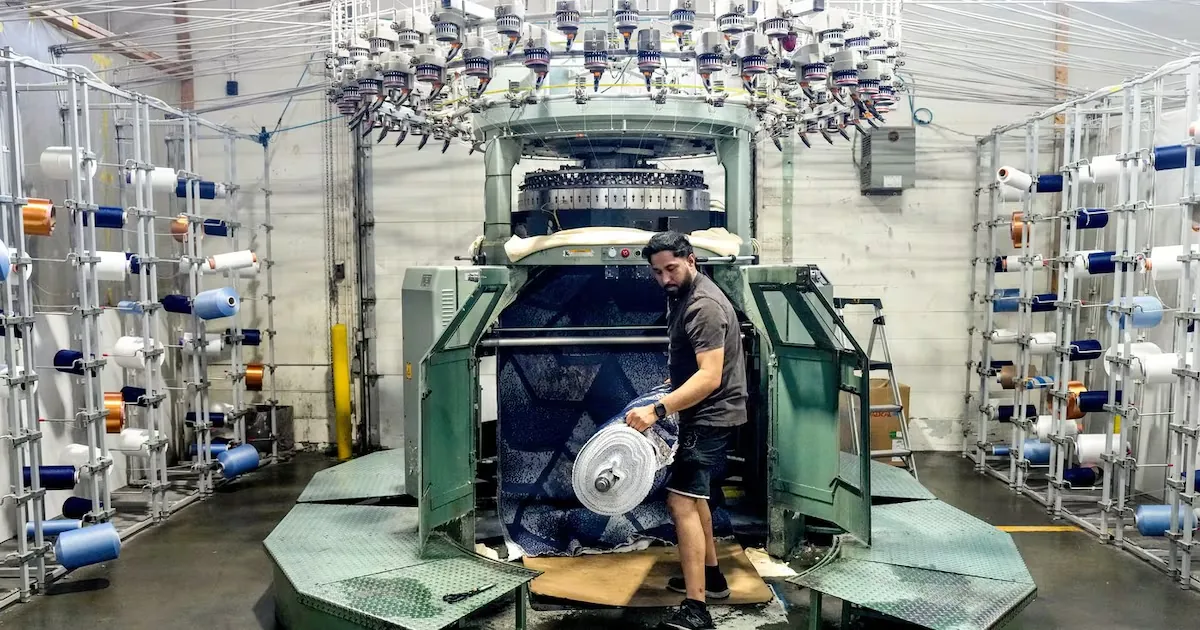
Fine Cotton Factory Inc., a Toronto textile maker with about half its sales tied to U. S. customers, plans to open a U. S. warehouse and start American production early next year after tariffs of up to 50 percent caused orders to tumble. The move shows how trade uncertainty is pushing some Canadian manufacturers to shift investment south even if tariffs are later removed.
Tariffs delayed orders and pushed work south
Skip Kann, executive vice-president of sales and marketing at Fine Cotton Factory, said American buyers delayed orders and ran down inventories after U. S. tariffs on Canadian goods took effect in March 2025. The company produces fabrics for clothing, mattresses and bedding at its Toronto mill. Orders are now starting to recover, Kann said, but uncertainty over the Canada-U. S. trade relationship has already changed company strategy. Fine Cotton Factory is shipping some unfinished fabrics to U. S. contractors for additional processing, reducing exposure to tariffs on finished products, while preparing a larger expansion. Kann said he plans to open a U. S. warehouse before sourcing equipment and beginning production early next year.
Kann said even removal of tariffs or a new Canada-U. S. trade agreement may not alter those plans, citing lasting damage to trust between buyers and Canadian suppliers. Pau Pujolas, associate professor of economics at McMaster University, said loss of confidence in cross-border supply chains could influence investment decisions for years. Ari Van Assche, a professor of international business at HEC Montreal, said some manufacturers first put expansion plans on hold and adjusted supply chains when tariffs began, but as the trade war continues they can no longer delay investment choices. He said he knows of another Canadian manufacturer now seriously considering a U. S. plant after facing steep tariffs, although a shortage of skilled workers is complicating plans.
What factory shift means for jobs and costs
For households and workers, the case points to a slower effect of tariffs through jobs and supply chains rather than shelf prices alone. If Canadian firms process more goods in the United States or open warehouses and plants there, future hiring, equipment spending and contractor work can move with that capacity. Van Assche said aggregate data does not yet show a broad shift, with no uptick in U. S. manufacturing investment coming from Canada and Statistics Canada figures showing Canadian direct investment in the United States down slightly at the end of 2025. That suggests most workers and suppliers are not yet affected, but prolonged uncertainty raises the chance that more firms follow the same path.
The story does not prove a wider move of Canadian manufacturing to the United States, and both economists described the risk as potential rather than established. It is based largely on plans stated by one company and observations from two academics, reported by The Canadian Press on Nov. 11, 2026. It also does not show whether U. S. processing will restore Fine Cotton Factory sales, lower costs for buyers, or protect the firm if trade policy changes again.
// Read next
Investors rotate to defensive stocks as tech volatility puts markets on alert
Tech indexes have fallen sharply since October while healthcare and staples gained, as analysts say investors are prici…
China Singles Day sales stall as cautious shoppers hold back spending
Early Singles Day sales reached just over 1 trillion yuan by Oct. 31, flat on last year, as weak property wealth and di…
AI stocks rebound on Wall Street as CoreWeave jumps after earnings
The S&P 500 rose 0.9% as CoreWeave jumped 10.7% on a smaller loss and higher revenue forecast, while the Dow slipped an…