China Singles Day sales stall as cautious shoppers hold back spending
Early Singles Day sales reached just over 1 trillion yuan by Oct. 31, flat on last year, as weak property wealth and discount fatigue weigh on Chinese household demand.
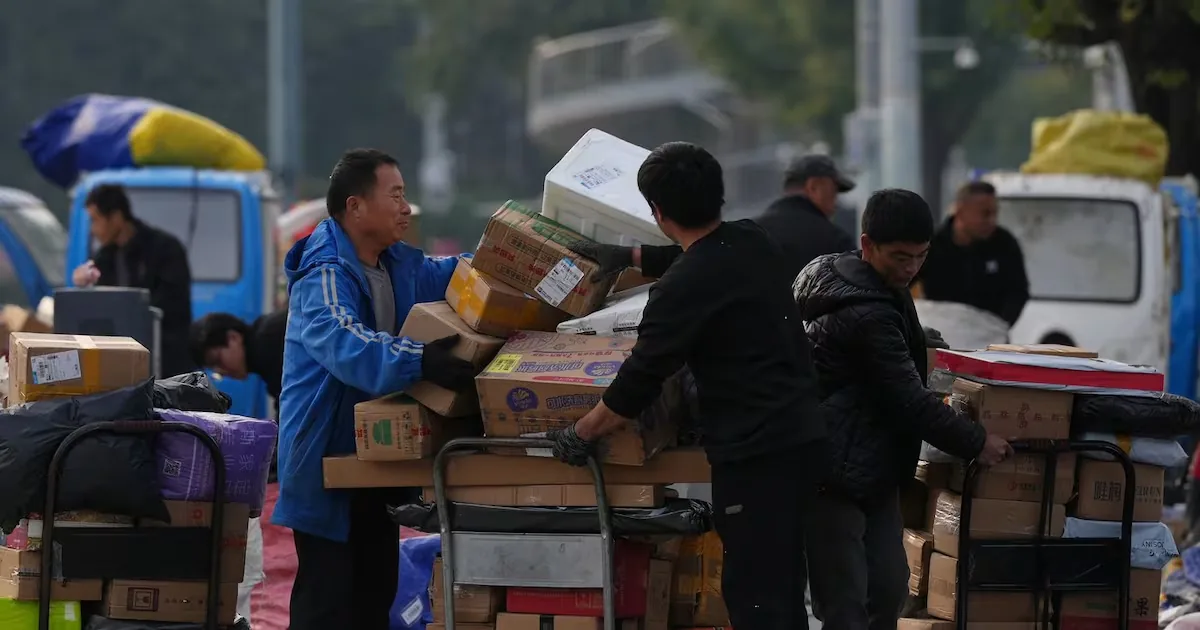
China’s Singles’ Day festival has generated just over one trillion yuan, about US$154 billion, in cumulative sales as of Oct. 31, broadly in line with the same period last year, retail data platform Syntun said. The result points to continued caution among consumers despite weeks of discounts centered on Nov. 11. The event, comparable to Black Friday and Cyber Monday in the U. S., is watched as a barometer of household demand and the broader economy.
Extended sales, AI push and flat early results
The Singles’ Day festival began in 2009 from “Bachelors’ Day,” a celebration of being single, and now targets all shoppers over a period lasting weeks. Retailers have increased sales mainly by extending the festival period rather than by higher spending per shopper. Total Singles’ Day sales in 2025 reached a record of almost 1.7 trillion yuan, about US$254 billion. E-commerce giants such as Alibaba have turned to artificial intelligence to encourage frugal shoppers to spend more, integrating its Qwen AI into Taobao and Tmall to help place orders and find products.
Plans offering AI tokens are being prominently promoted during Singles’ Day for the first time. This month, a livestream by Li Jiaqi, known as the “Lipstick King” for his large lipstick sales, sold plans covering roughly two trillion tokens within half an hour, according to Chinese media. Consumer demand remains subdued as a prolonged property downturn weighs on confidence. Home prices have fallen roughly 20 per cent or more from their 2021 peak, with smaller cities and the resale market seeing steeper declines. China’s economy expanded 4.6 per cent from a year earlier in January-September, much of that momentum from exports, while retail sales of consumer goods rose just 1.1 per cent.
What weak household demand signals for jobs and trade
For households and workers, the data describe less wealth, slower income growth and tighter budgets rather than a broad collapse in spending. Many families are holding back as youth unemployment hovers around 18 per cent and income growth lags. Shoppers interviewed in Foshan and Beijing said they were buying fewer non-essential items, shifting away from famous or high-end brands, and removing extras such as cameras and game consoles from lists. Domestic demand for big-ticket items has been particularly weak, with passenger car sales in China falling almost 25 per cent in January-September, partly reflecting cuts to government subsidies, while passenger car exports rose 71 per cent. Luxury groups LVMH and Kering both reported softer demand in China in recent months.
The story does not prove that Chinese consumption has stopped, and it does not apply equally to all categories or households. Exports surged 35 per cent from a year earlier in October, driven by semiconductors and electric vehicles, and China is on track to surpass last year’s record trade surplus of US$1.2 trillion. Health-related products are selling relatively well, with online sales of imported fish oil up nearly 43 per cent in the 12 months through September, according to WPIC data. With 1.4 billion people and vast household savings, the country retains substantial spending potential even as preferences shift toward health, lifestyle and experiences.
// Read next
Investors rotate to defensive stocks as tech volatility puts markets on alert
Tech indexes have fallen sharply since October while healthcare and staples gained, as analysts say investors are prici…
AI stocks rebound on Wall Street as CoreWeave jumps after earnings
The S&P 500 rose 0.9% as CoreWeave jumped 10.7% on a smaller loss and higher revenue forecast, while the Dow slipped an…
Orion Digital bought back 1 million shares at $1.15 as cash reached $30.9M
Orion Digital repurchased one million shares on Nov. 10, lifting 2026 buybacks to 1.24 million shares while holding $30…