Canada wins $400 million China tariff relief on pork and seafood
Carney secured tariff relief worth over $400 million for pork and seafood as exports to China rose 31.4 percent, while Chinese EV investment remains unresolved.
AIXVZ
AI agents that sell for you. AIXVZ builds sales agents and automates routine business processes — from first contact to deal.
Learn more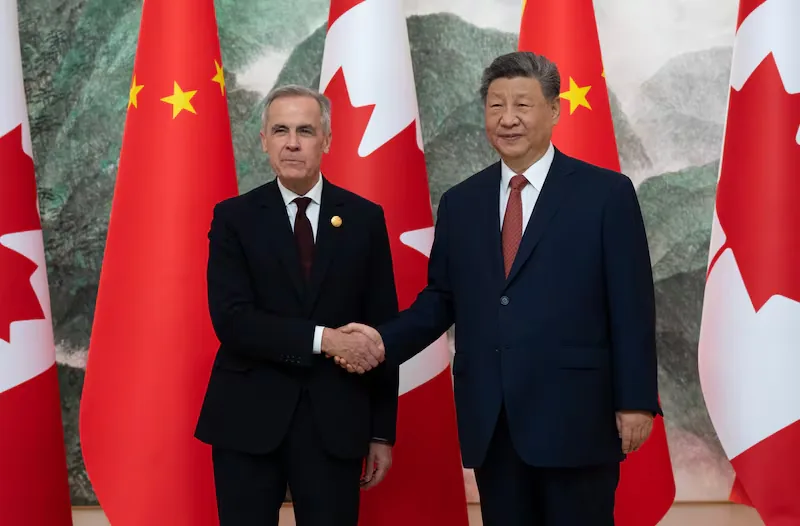
Prime Minister Mark Carney met Chinese President Xi Jinping in Shenzhen on Tuesday during the Asia-Pacific Economic Cooperation summit and secured tariff relief valued at more than $400 million for Canadian pork and seafood exporters. Xi declared that the relationship with Canada had fully resumed, while Canadian officials said just under $8 billion in exports have now returned to the Chinese market. The outcome matters for farm incomes and processing jobs tied to exports.
Tariff cuts cover pork, halibut and shrimp
Canadian officials put the extended relief at more than $400 million, including $116 million in frozen pork cuts, $96 million in Greenland halibut, and various frozen cold-water prawns and shrimp. Agreements were also reached for market access for geoduck and mollusk, according to Kody Blois, parliamentary secretary to the prime minister. The Canadian Meat Council called China one of the most critical markets for pork processors and exporters, while HyLife, one of Canada's top pork producers, said the move supports farmers and plant workers. China also restored access for Canadian beef from 20 registered meat establishments.
Since Carney's visit to Beijing in January 2026, Canadian merchandise exports to China rose 31.4 per cent in the first half of 2026 to $21.5 billion, according to Global Affairs Canada. Crude oil shipments to China increased by approximately 37 per cent this year. On Nov. 4, both countries agreed to extend market-access concessions through the end of 2028, with China suspending additional tariffs on Canadian canola meal, peas, lobster and crab. Carney has described the shift as a warming of relations after years of tension, including China's detention of Michael Spavor and Michael Kovrig. Broader disagreements over foreign interference, cybersecurity, human rights and national security remain.
What export jobs and auto talks mean for households
For households connected to farming, fishing and meat processing, restored access to China supports sales volumes and steadier work in export-oriented plants and coastal fisheries. China is described by officials as a major seafood market and one of the largest for Canada, making tariff relief directly relevant to producer revenue rather than abstract trade totals. The broader export rebound, including crude oil and farm goods, also fits Carney's effort to diversify Canada's economy and reduce reliance on the United States. Workers outside those supply chains will feel less direct effect, but regional economies dependent on pork, seafood and canola gain breathing room through 2028.
The announcements do not resolve the dispute over Chinese electric vehicles or guarantee new factory jobs. There was no new decision on Chinese EVs entering Canada, with the January 2026 framework unchanged: Canada replaced its 100 per cent surtax with the 6.1 per cent most-favoured-nation tariff under a 49,000-vehicle annual quota. Carney said any Chinese auto investment must include genuine domestic manufacturing, not assembly from imported parts, while White House trade adviser Peter Navarro criticized the outreach to Beijing. Closer economic engagement also leaves security and rights concerns unsettled.
// Read next
Growth Stocks Turn Cheaper Than Value for First Time Since 2008
The S&P 500 Growth index fell 15% from the October peak and its forward P/E dropped below value, a split last seen in t…
Tech sell-off drags down three consumer stocks with raised outlooks
With the S&P 500 down nearly 12% from its peak, Amer Sports, Tapestry and Birkenstock trade at 13 to 22 times forward e…
Monster and AutoZone Offer Shelter as Nasdaq Swings on Nvidia
With the Nasdaq whipsawed by Nvidia leadership turmoil, Monster Beverage and AutoZone stand out for low volatility and …
Canada bank earnings preview puts 2027 outlooks in focus
Canada's Big Six banks report fourth-quarter results this week, with analysts watching capital markets softness, margin…