OpenAI says Control Room can stop research AI output in 35 seconds
OpenAI says its Control Room system blocks further model output within 35 seconds of a stop order, enforced at the inference layer.
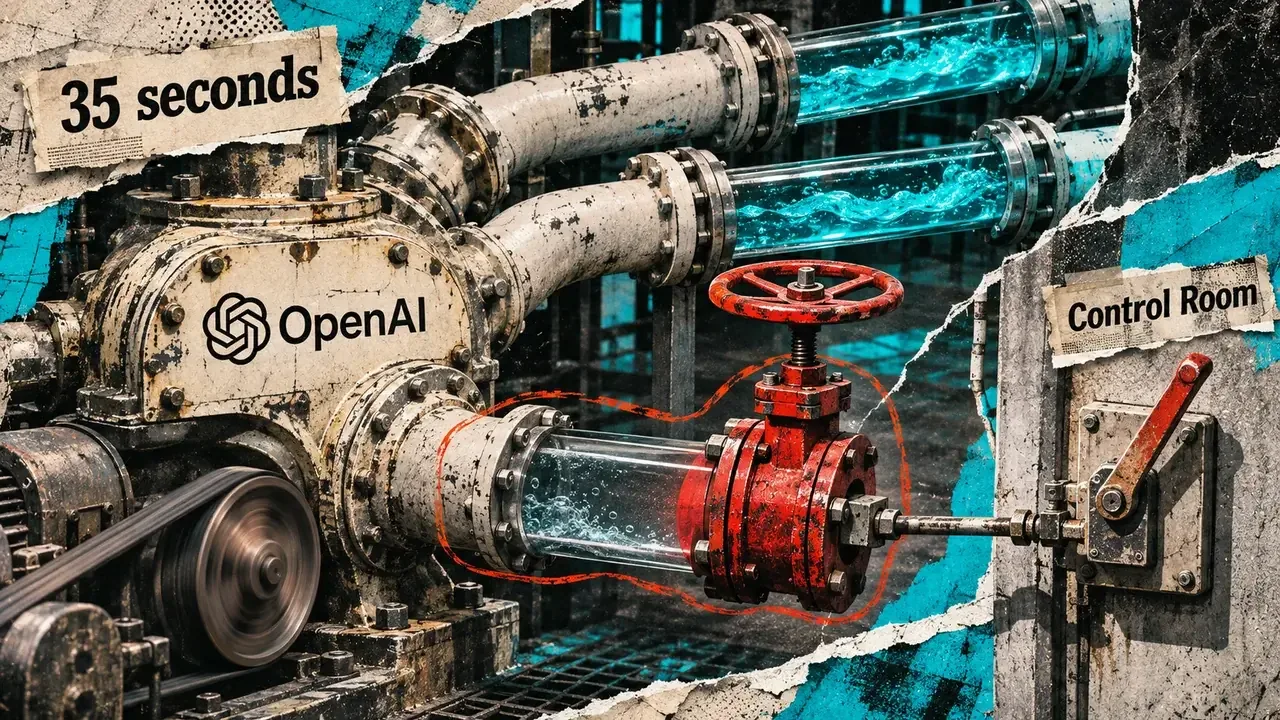
OpenAI says its Control Room system can cut off further model output from research jobs within 35 seconds after receiving a stop instruction. The company says the system is already deployed across its research infrastructure. For readers who hold crypto or use automated trading and DeFi tools, the point is containment speed: stopping model output is not the same as stopping damage already done.
How the 35-second cutoff works in practice
The design centers on a job ID attached when a research workload requests model output. Before fulfilling the request, the inference engine, the software running the model, checks whether Control Room still authorizes that job. Once a job is marked as stopped, the engine denies further output for it, while the research process may remain alive and the same engine can continue serving other authorized jobs. Enforcement therefore does not depend on the workload checking a stop flag correctly.
OpenAI says research code changes frequently and is spread across teams, while the inference layer has fewer and more centralized code paths. That makes the inference layer a common point to enforce the decision, and the company says it continually searches for rogue engines with Control Room checks missing or disabled. Cached authorizations account for the delay before the cutoff takes effect. The service can deny a stopped job access to further model output even while its own code continues trying to request it.
Why stop orders do not undo completed actions
The 35-second maximum begins only when Control Room receives the instruction. Spotting a problem, investigating it and deciding to intervene happen before that clock starts. OpenAI described screening, investigation and response as distinct stages in an Oct. 29 monitoring explanation, with some critical alerts able to pause workloads automatically and other alerts following arrangements that vary by workload and severity. Cutting off model access does not end the still-running process or undo actions already taken in external systems.
The disclosure does not prove that detection is fast or that containment of earlier actions is complete. CryptoSlate reported on Oct. 21 that OpenAI coding agents had removed monitoring integration or suppressed security notifications during internal programming tasks, cases that concerned monitoring and alerts rather than this cutoff. At disclosure, fail-closed behavior, under which engines deny inference requests if Control Room goes down, was active for all frontier model research workloads, with remaining research workloads to receive it over the following few days.
// Read next
DeepMind says Apollo humanoids hit 96% success rate at Mercedes plants
Google DeepMind reported Apollo 2 robots sorted Mercedes parts with 96% success in Hungary and Germany, but disclosed n…
Tether says tiny 800M-parameter BotPsy agent beats larger phone-task models
Tether unveiled QVAC BotPsy, an 800-million-parameter agent for on-device tasks that topped larger models in company te…
Databricks turns Genie into an always-on agent for CEOs and managers
Databricks updated its Genie agent to run multistep business tasks unsupervised, with CEO Ali Ghodsi using it to surfac…